Elizabeth Sweetwater
  • Tutorials
  • Movies
  • Happy Sewers
  • About

Pencil Skirt

2/10/2021

 
Pencil Rok
Picture
Introductie
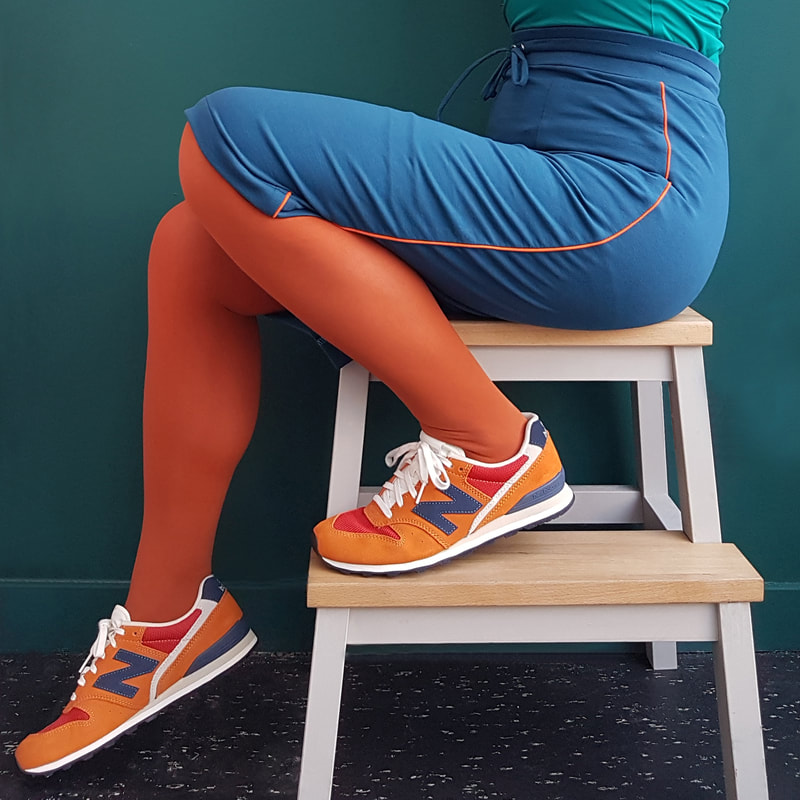
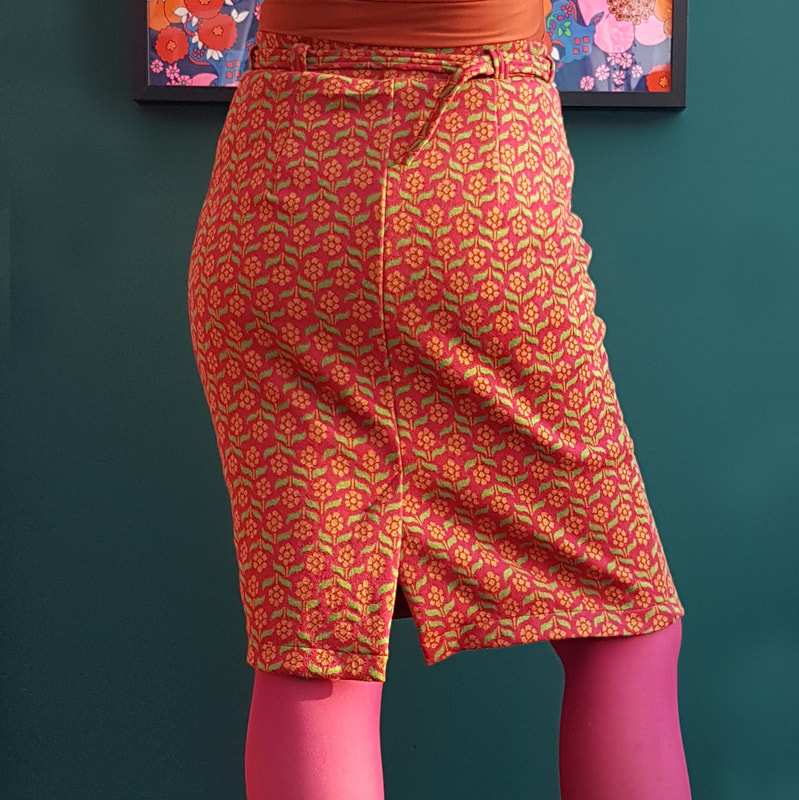
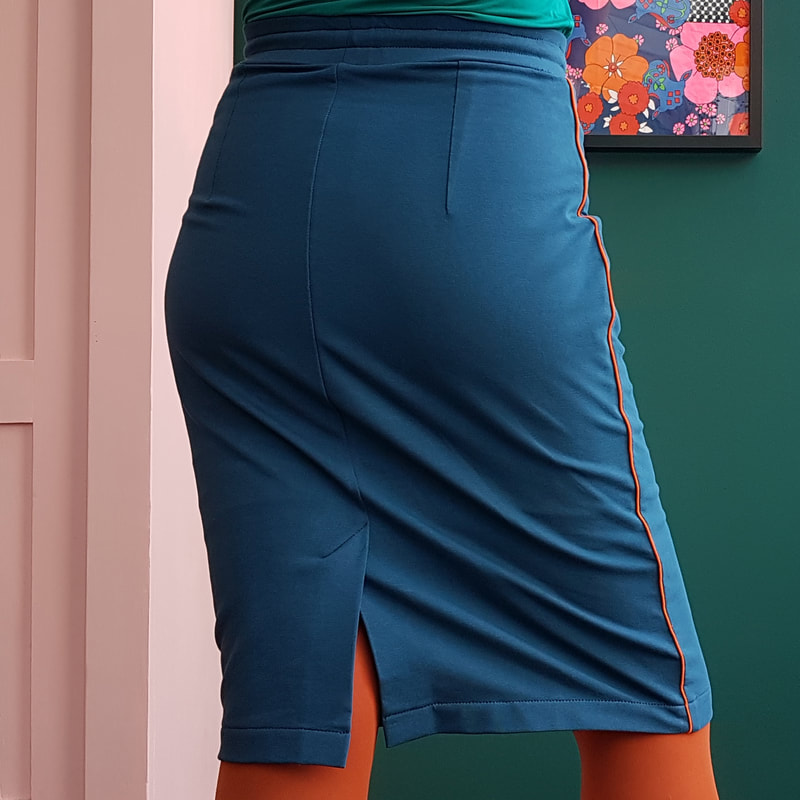
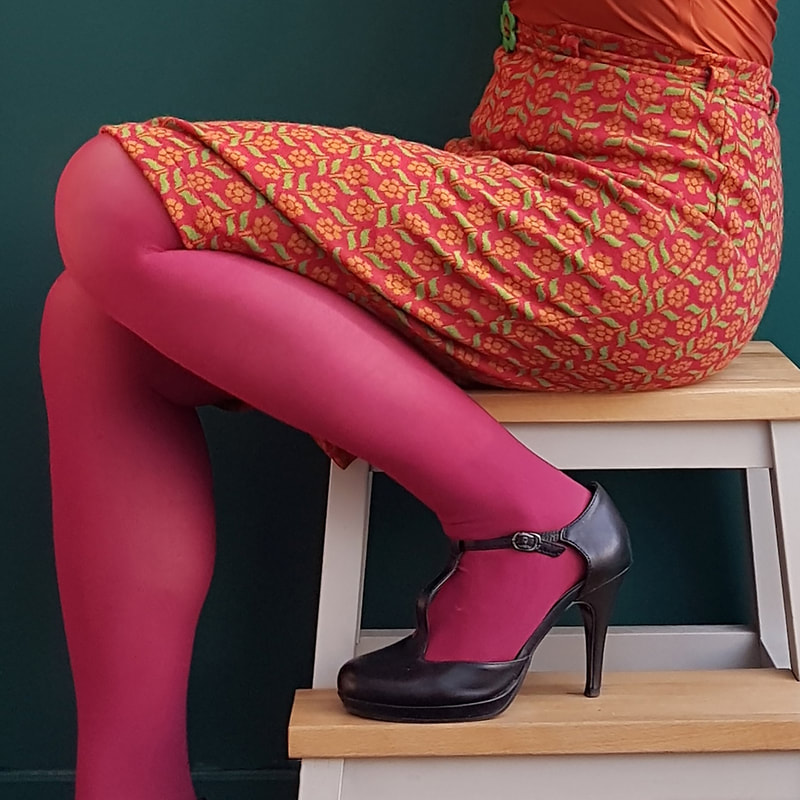
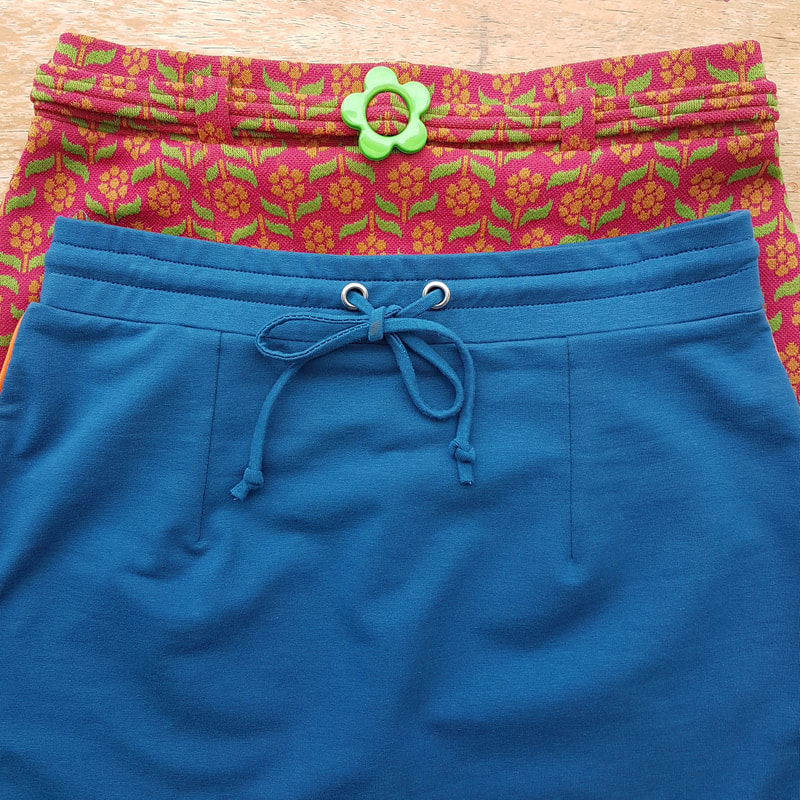
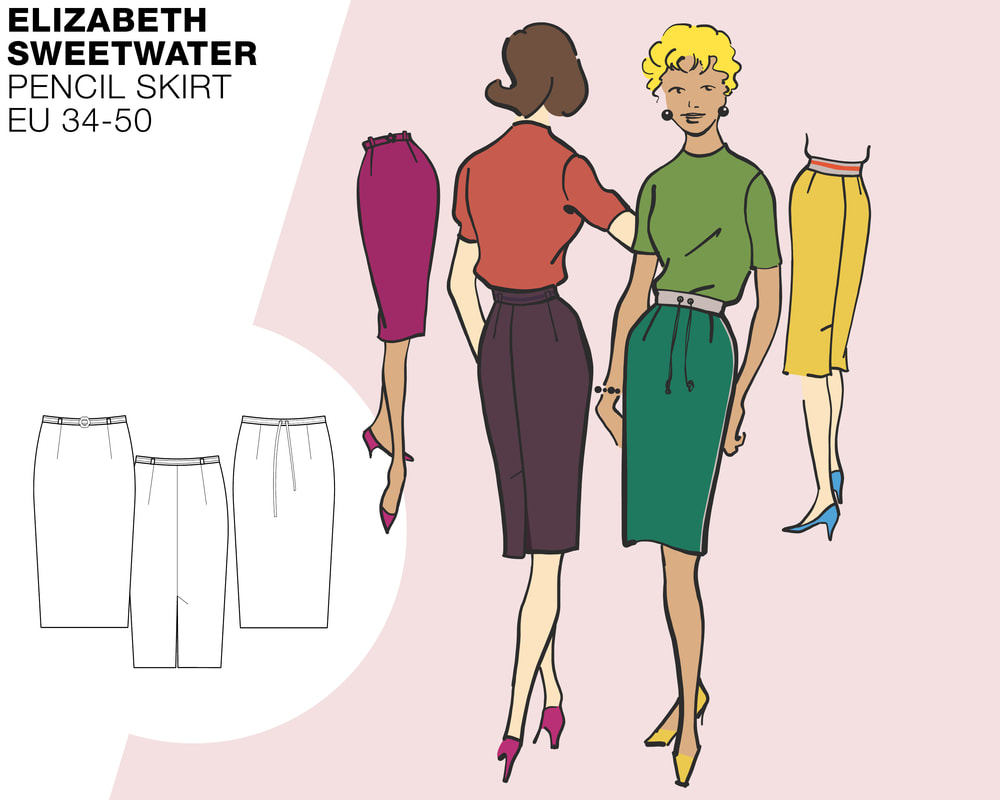
Helemaal hip, deze pencilskirt. Je kunt ‘m sportief dragen met een paar sneakers en een tshirt of vrouwelijk met pumps en een mooie blouse. Het patroon is geschikt voor stevige tricots als french terry en punta. Je kunt kiezen uit twee elastische tailleband opties. Het rokje is nauwsluitend maar heeft achter een split. Je moet er natuurlijk wel mee kunnen fietsen.

Introduction
Totally hip, this pencilskirt. You can wear it sporty with a pair of sneakers and a tshirt or feminine with pumps and a beautiful blouse. The pattern is suitable for sturdy jerseys such as French terry and punta. There is a choice of two elasticated waistband options.The skirt is tight-fitting but has a split at the back. You must of course be able to cycle in it.

Picture
Picture
Picture
Picture

1.
De voorbereiding
Getting prepared

Bij aankoop van een van onze patronen ontvangt u 3 PDF-bestanden: een voor thuisprinters om op A4-papier af te drukken, een tweede voor A0-gebruikers om af te drukken in een printshop en een derde is voor mensen die een overheadprojector gebruiken. De volgende algemene introductietekst geeft een overzicht van hoe onze patroon-pdf's zijn opgezet en legt uit hoe je de A4-versie kunt afdrukken en hoe je de pagina's aan elkaar kunt plakken. A0-gebruikers kunnen bij hun printshop aangeven welke pagina's ze nodig hebben. Op de projector bestanden staan alle panden in dezelfde richting.
On purchasing any of our patterns you will receive 3 PDF files: one for home printers to print on A4 paper, a second at A0 is for printshop users and a third is for sewers who use an overhead projector. The following general introduction text provides an overview of how our pattern pdfs are set up and explains how to print out the A4 version and how to stick the pages together. A0 users should simply instruct their printshop which pages they require. Projector users will note that all pieces have the grain direction facing the same way.
Picture
1a.
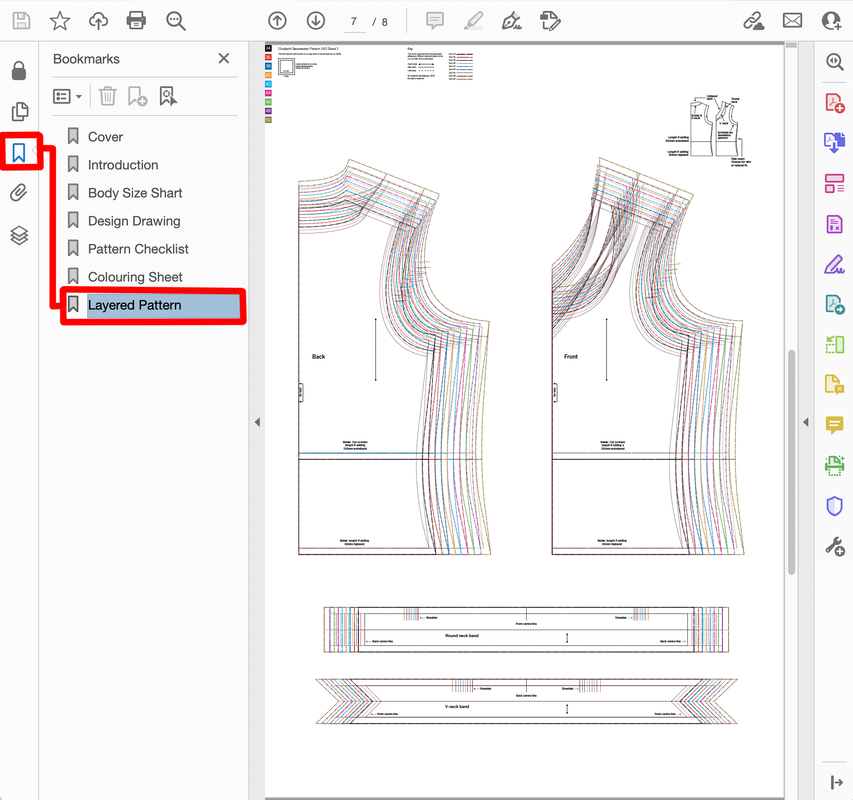
Al onze patronen volgen dezelfde opzet zoals hier uitgelegd. Elk patroon begint met een voorblad, een inleiding, een lichaamsmatentabel, een ontwerptekening, een patroonchecklist en een kleurplaat. Het patroon is te vinden op de laatste lijst onder het tabblad Bladwijzers. 
All of our patterns follow the same set up as explained here. Each pattern starts with a cover page, an introduction, a body size chart, a design drawing, a pattern checklist and a colouring sheet.The pattern can be found on the last listing under the bookmarks tab.
Picture
1b.
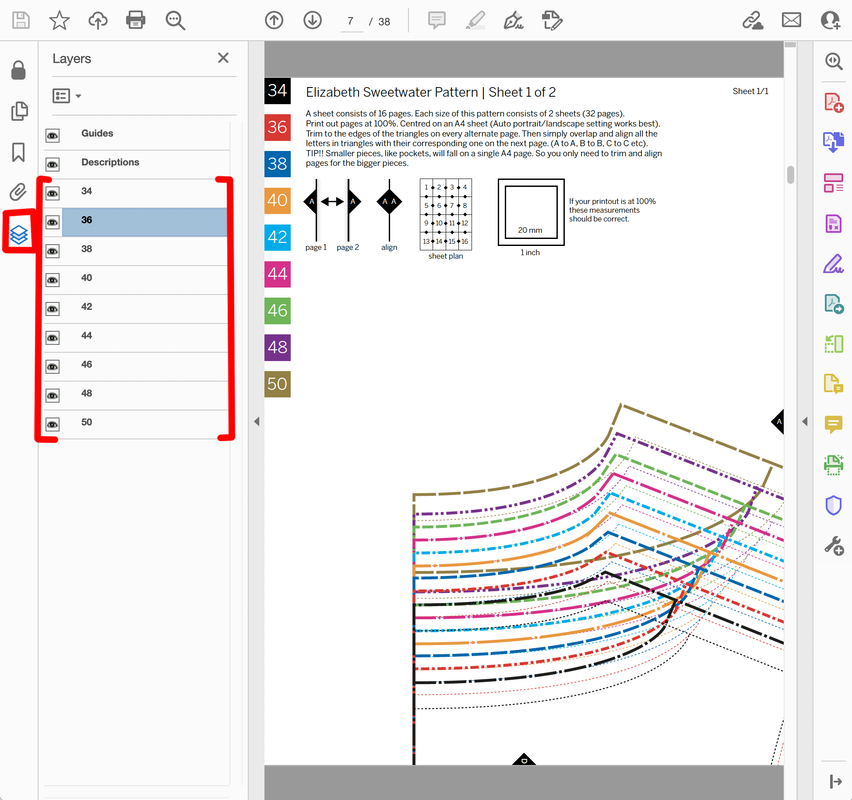
After locating the pattern click on the layers icon. Here you can see the full range of sizes. They are all layered on top of one another. You can click on the eye icon by each individual size to turn it on or off.
After locating the pattern click on the layers icon. Here you can see the full range of sizes. They are all layered on top of one another. You can click on the eye icon by each individual size to turn it on or off.
Picture
1c.
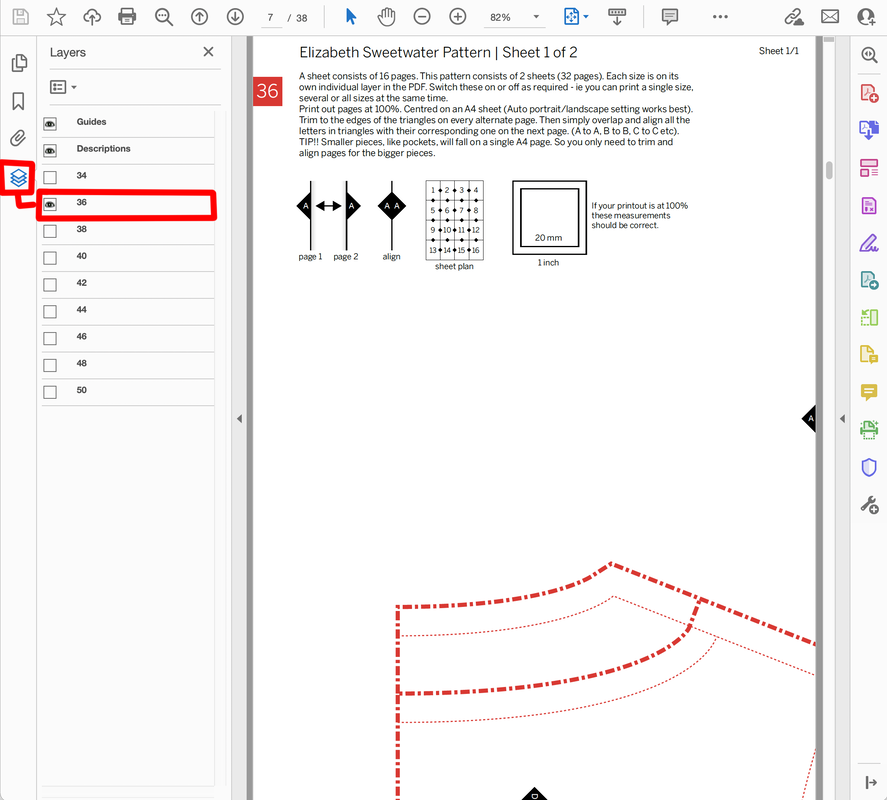
Je kunt vervolgens de maat of maten selecteren die je wilt afdrukken.
You can then select the size or sizes you wish to print out.
Picture
1d.
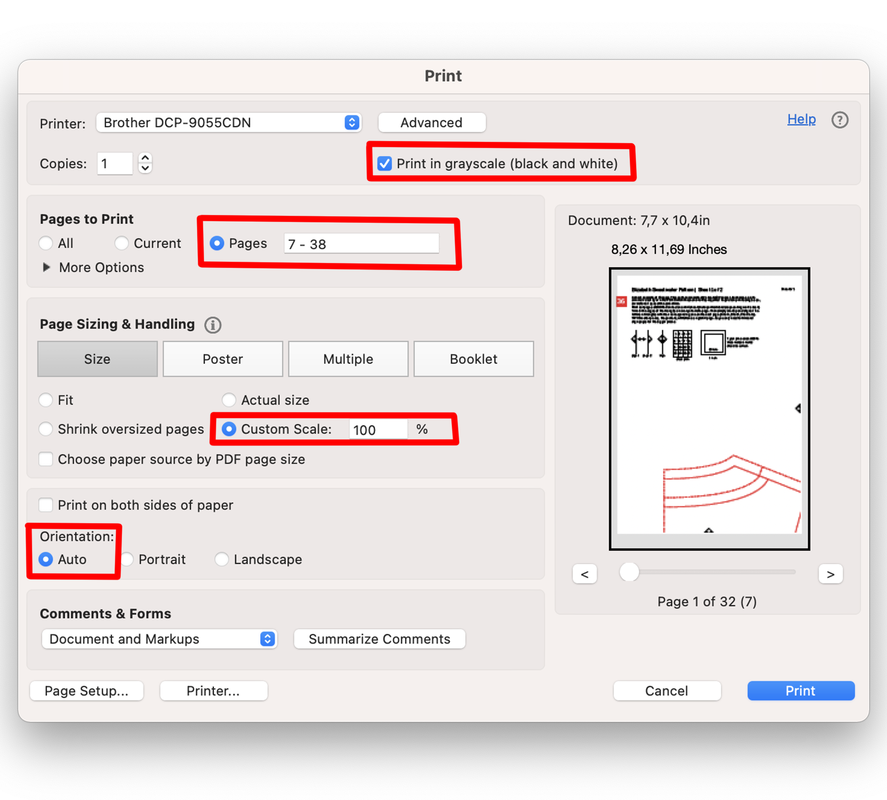
Als je thuis print op een A4-printer, drukt u op het afdrukpictogram in het bovenste menu van de PDF. Uw afdrukdialoogvenster kan hiervan verschillen  (rechts in het midden weergegeven), maar ik heb een paar knoppen gemarkeerd om het te verduidelijken. Om inkt te besparen kun je instellen dat het patroon in grijstinten wordt afgedrukt. Selecteer de pagina's die je wilt afdrukken, over het algemeen vanaf pagina 7 tot de laatste pagina. Zorg ervoor dat de schaal is ingesteld op 'ware grootte' of '100%' - NOOIT op 'passend op pagina'. Het werkelijke paginaformaat van de PDF is kleiner dan A4. Stel de oriëntatie in op Auto, ik vind dat dit het beste werkt omdat het dan de pdf op een A4-blad centreert.
If printing at home on an A4 printer press the print icon in the top menu of the PDF. Your print dialogue box may vary to this one (shown middle right), but I have highlighted a few buttons to take note of. To save ink you can set to print the pattern in greyscale. Select the pages to print which will usually be from page 7 until the final page. Make sure the scale is set to 'actual size' or ‘100%' - NEVER to 'fit to page’. The actual page size of the PDF is smaller than A4. Set the orientation to Auto, I find this works best as it will then centre the pdf on an A4 sheet.
Picture
1e.
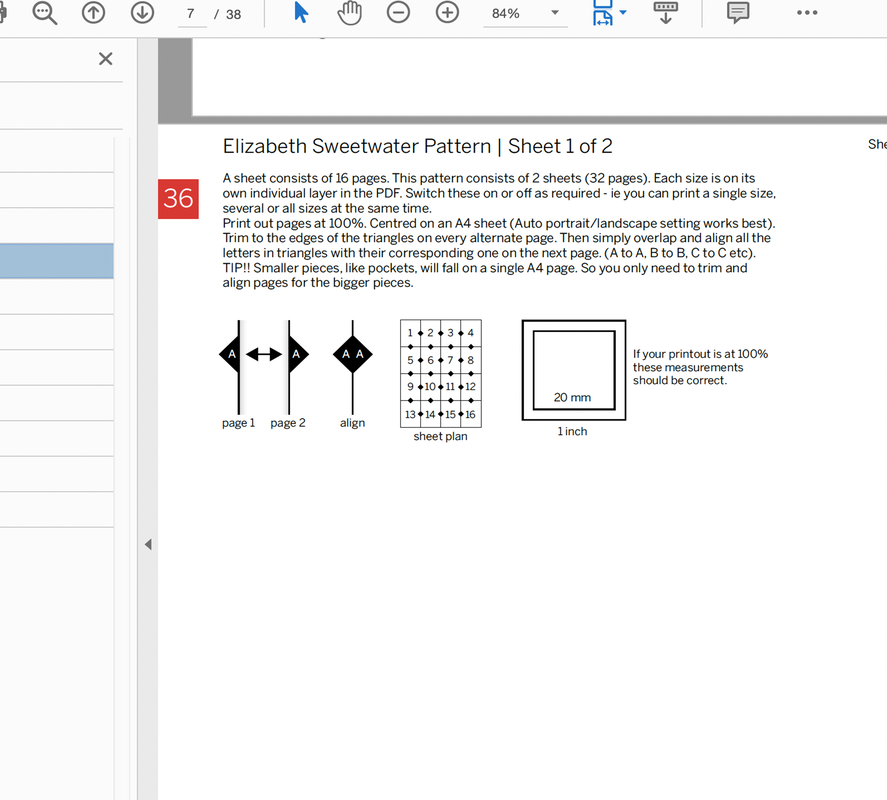
Rond elke pagina zie je kleine zwarte driehoekjes met letters erin. Met een schaar en doorzichtig plakband bij de hand, kun je vervolgens om elke pagina uitknippen tot aan de driehoeken en vervolgens de letters in de zwarte driehoeken uitlijnen met de overeenkomende op de volgende pagina (A naar A, B naar B, enz.). Vervolgens kunt u het blad aan elkaar plakken. Een vel kan uit 16 of 20 pagina's bestaan, afhankelijk van het gekochte patroon. Sommige patronen bestaan ​​uit één volledig vel (bijv. rokken met 16 pagina's), sommige uit twee vellen (bijv. jurken met 32 ​​pagina’s).
Around each page you will see small black triangles with letters inside. With scissors and clear sticky tape at hand, you can then cut out every alternate page to the triangles and then align the letters in the black triangles with the matching ones on the following page (A to A, B to B, etc). You can then proceed to stick the sheet together. One sheet can consist of 16 or 20 pages depending on the pattern purchased. Some patterns consist of one full sheet (eg. skirts with 16 pages), some of two sheets (eg. dresses with 32 pages).
Picture
1f.
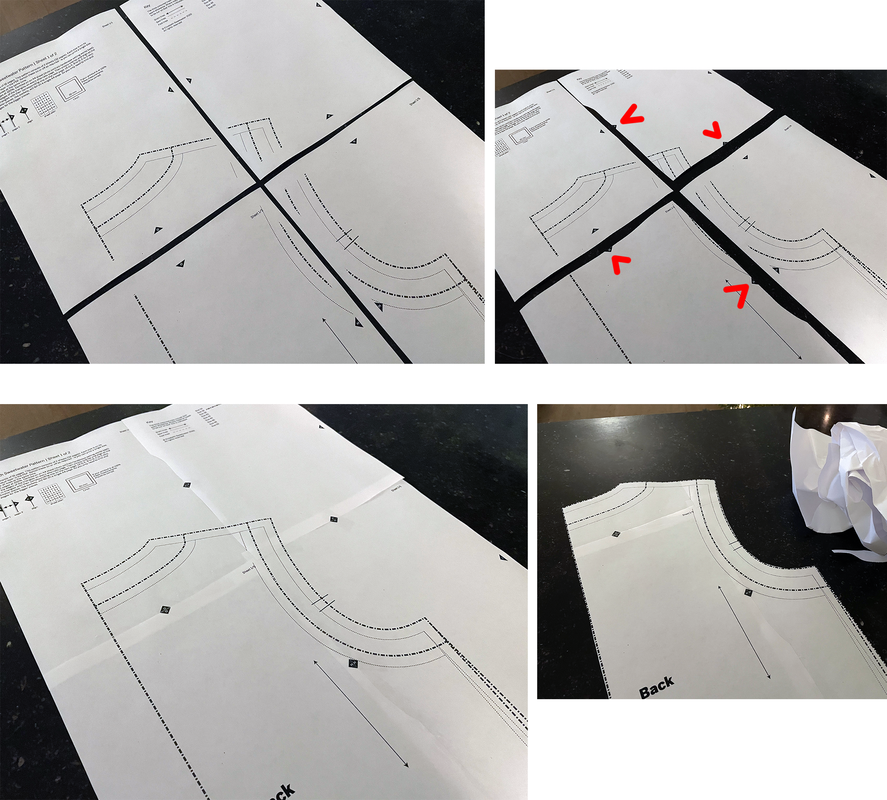
Nadat je je pagina's hebt afgedrukt, leg je ze op een plat oppervlak. Knip de pagina's om en om uit tot aan de driehoekjes. Plak vervolgens met doorzichtig plakband de driehoeken met dezelfde letter aan elkaar. Knip vervolgens je patroondeel uit tot aan de stippellijnen. Deze stippellijnen bevatten de benodigde naadtoeslag voor elk stuk. De dunnere stippellijnen geven de uiteindelijke maat aan. Voor het gemak zijn alle namen van de stukken, samen met de draadrichting en handige instructies in de afzonderlijke patroondelen geplaatst, zodat u het overtollige papier veilig kunt weggooien (recycle). Let op dat sommige patronen ook een verklarend diagram kunnen bevatten op een van de pagina's die bewaard moeten worden. Als je de  patroondelen op patroonpapier wilt overtrekken, moet je er aan denken alle markeringen te kopiëren (bijv. draadrichting, knipjes etc.).
Once you have printed out your pages lay them out on a flat surface (top left). Cut out to the triangle edge on alternate pages (top right). Then with clear sticky tape connect the triangles that correspond to each other (bottom left). Then cut out your pattern piece to the dashed lines (bottom right). These dashed lines include the necessary seam allowance for each piece. The thinner dotted lines indicate the finished size. For convenience all names of pieces, along with grain direction and helpful instructions have been placed inside individual pattern pieces, so you can safely throw away (please recycle) the excess paper. Note some patterns may also include an explanatory diagram on one of the pages that should also be kept. 
To continue trace all the pattern pieces onto pattern paper, remembering to copy all the markings (eg. darts, piece to piece alignment lines etc).
1g.
Nu je al je stukken hebt uitgeknipt raadpleeg het onderstaande overzicht om je voor te bereiden op het uitknippen van de door jou gekozen stof.
Now you have cut out all your pieces consult the overview below to prepare yourself for the next stage of cutting out the pieces from your chosen material.
Patroondelen:
- Voorpand knip 1x aan vouw
- Achterpand links knip 1x
- Achterpand rechts knip 1x
- Tailleband knip 1x aan vouw
- Riemlusjes optioneel knip 6x
Patternpieces:
- Front piece cut 1x to fold
- Back piece left cut 1x
- Back piece right cut 1x
- Waist band cut 1x on fold
- Loops optionally cut 6x


2.
​Delen op de stof leggen
Layout pattern pieces on fabric
2a.
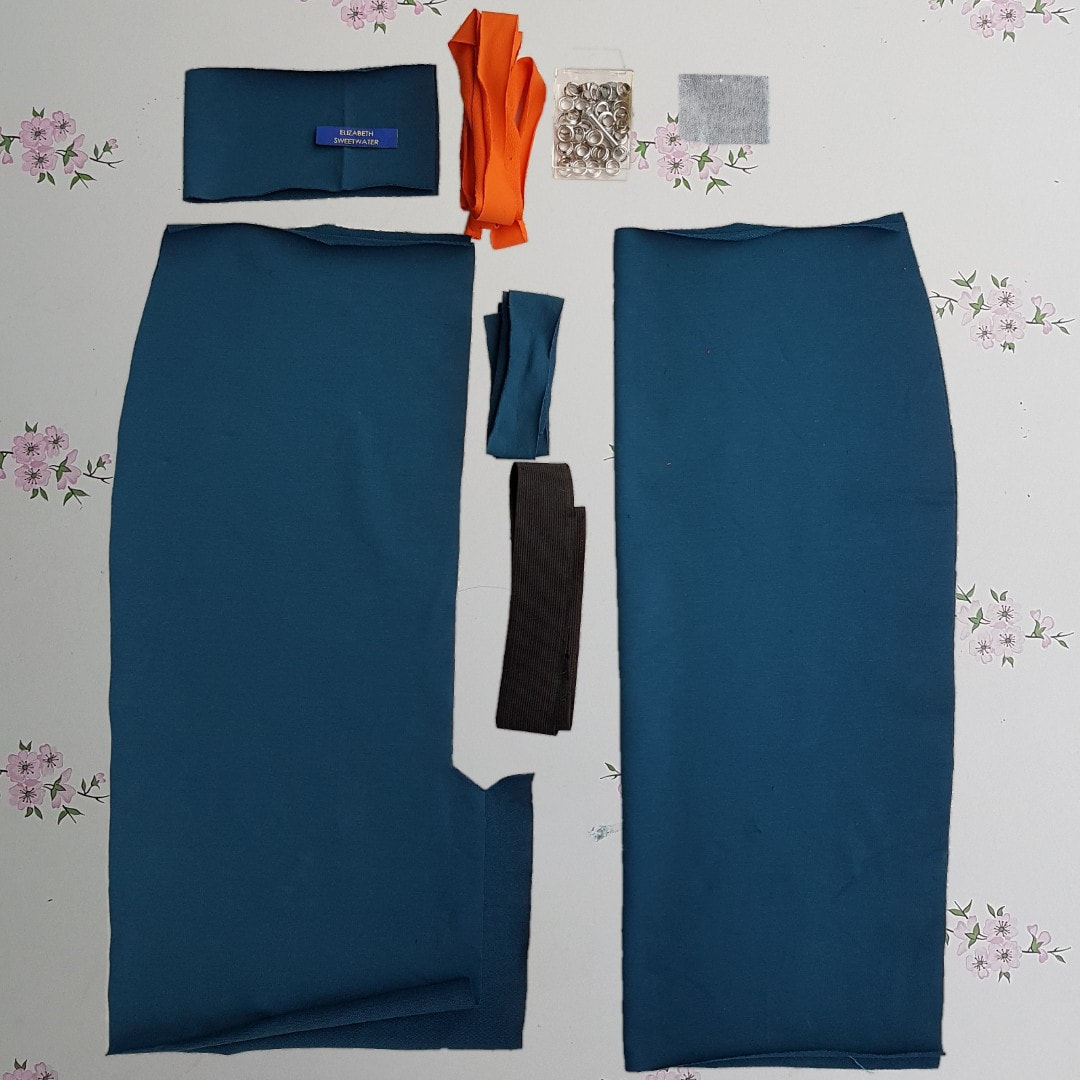
French terry, punta of trevira
French terry, punta or trevira
150cm breed/wide
Hier petrol/here petrol
Patroondelen/patternparts:
Voorpand, achterpanden, tailleband, riemlusjes (optioneel). En knip op maat voor riem een strook van 110cm lang en 6cm hoog.
Frontpart, backparts, waistband, beltloops (optionally). Cut to size for the belt a strip of 110cm wide and 6cm high.
Afmeting/amount:
90cm
2b.
Single jersey- 150cm breed/wide
Hier petrol/here petrol

Voor het koord knip je een strook van 3.5cm hoog en ongeveer 120cm breed.
For the drawstring cut a strip of 3.5cm high and 120cm width.
Picture
Piping/Piping
French terry of single jersey
French terry or single jersey
150 cm breed/wide
Hier petrol/here orange
- Langs de zijnaden.
1 Strook van 2.5cm hoog en de hele stofbreedte.
- Along the sideseams.
1 Strip of 2.5cm high and full fabric width.
Fournituren/Haberdashery
-Eventueel een geweven label.
- Vlieseline: klein stukje niet rekbaar (versteviging stof nestels).
- Ritsvoetje.
- Een setje nestels van 8 mm plus gereedschap.
- Readymade drawstring appr.1.5 meter (optioneel).
- Eventueel koordstoppers.
- Een klein veiligheidsspeldje (als je de drawstring zelf maakt).
- Eventueel een gespje van 2cm doorsnee.
- Een stuk elastiek van 4 cm hoog en de lengte van je taillewijdte.
- Woven label (optional).
- Small piece of non-stretchable fusible interlining (to reinforce fabric for eyelet).
- Zipperfoot.
- Set of 8 mm eyelets plus tools.
- Ready made drawstring appr.1.5 metre (optional).
- Cordstoppers (optional).
- Small safetypin (if you make the drawstring yourself).
- 2cm buckle (optional).
- A piece of elastic 4 cm high and the width of your waist.

Goed om te weten
Ik ga in deze werkbeschrijving uit van het gebruik van een overlock machine. Mocht je daar niet over beschikken dan kun je een zig-zag steek gebruiken op een gewone naaimachine. Ik raad dan wel aan om er altijd een stretch stiksel naast te plaatsen. De naadtoeslag van de patronen is 1cm. Check wat de breedte instelling van je naad is op je lockmachine is. Is het 0,7cm dan kun je tijdens het stikken 3mm wegsnijden. De stretchnaden stik je met een stretchsteek instelling op de gewone naaimachine.


​Good to know
For this tutorial an overlock machine was being used for sewing most of the garment. However, it is possible to use a regular sewing machine and sew with a zigzag stitch. I do recommend sewing an extra stretch stitch next to it to create clean lines. The seam allowance of the patterns is 1cm. Check the seam width setting of your overlock machine. If it is 0.7cm you can cut away 3mm while sewing. The stretch seams can be sewn using the stretch setting on a regular sewing machine.


3.
Coupenaden, piping en zijnaden
Darts, piping and sideseams
Picture
3a.
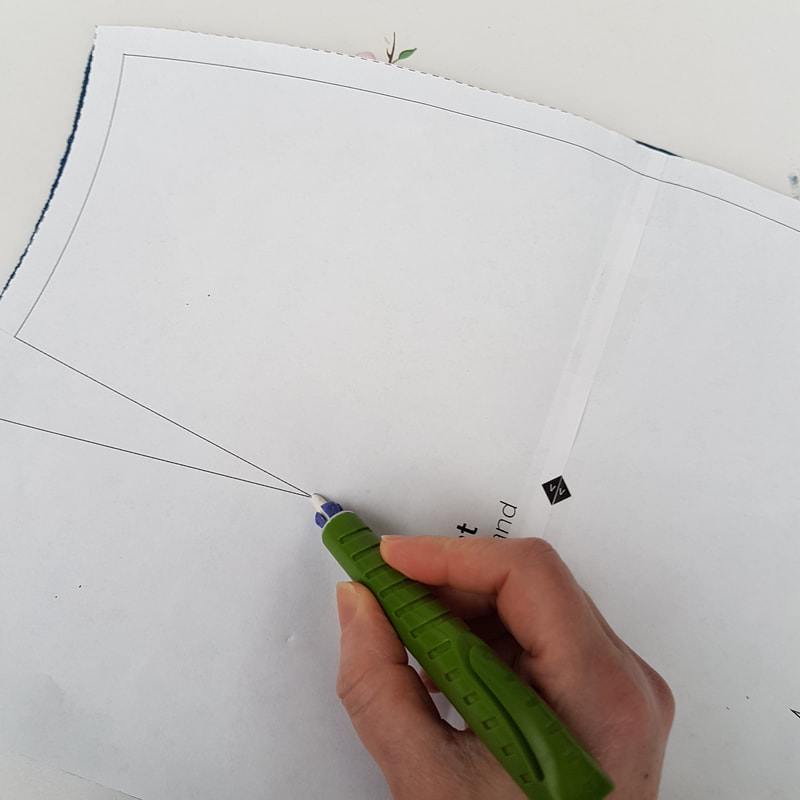
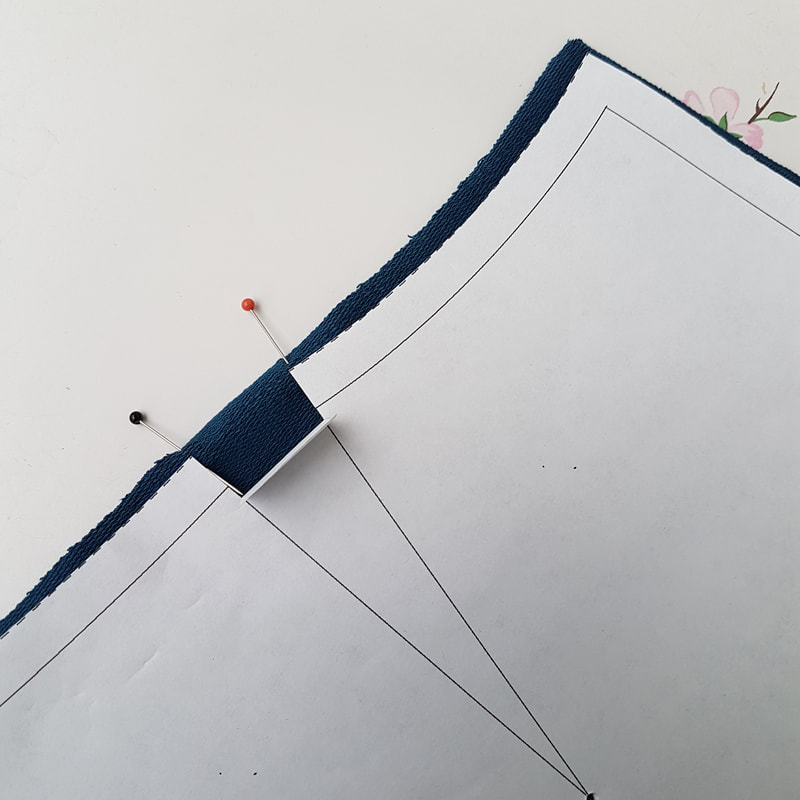
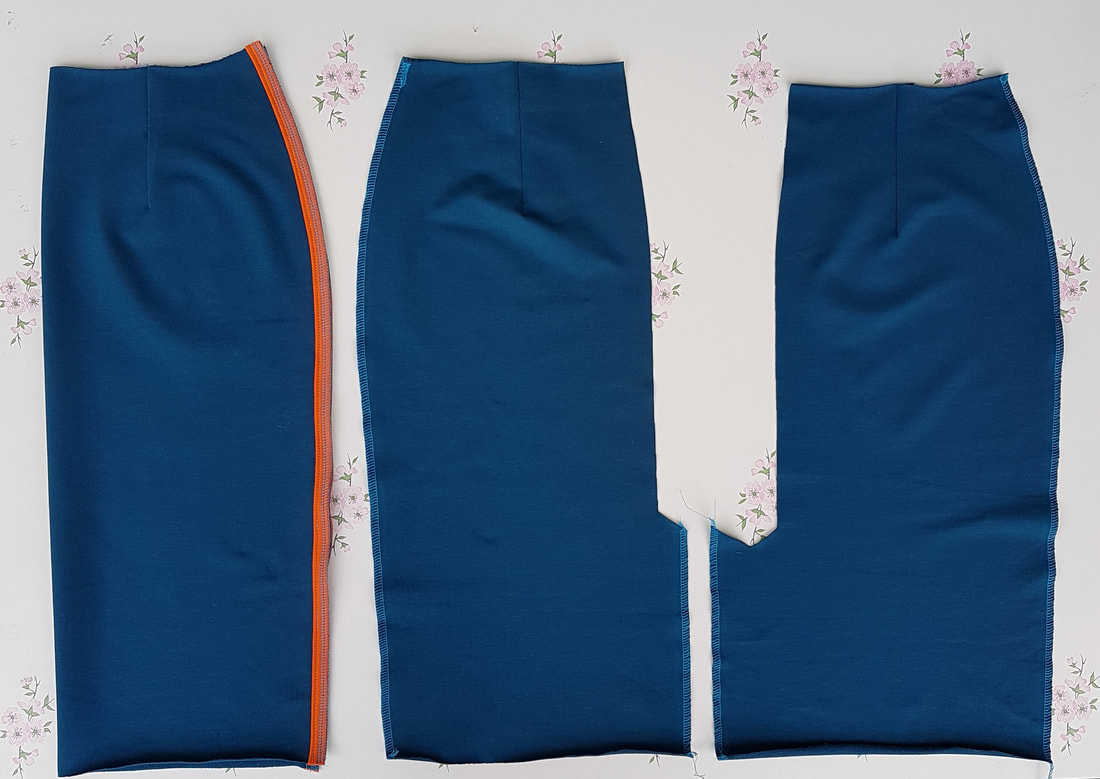
Neem het eindpunt van de coupenaad over van het patroon op de achterkant van de stof.
In the tutorial of the zipper jacket you can see how to copy the dart  from the pattern piece, pin it and sew it. Copy the tip of the dart from the pattern on the wrong side of the fabric.
Picture
3b.
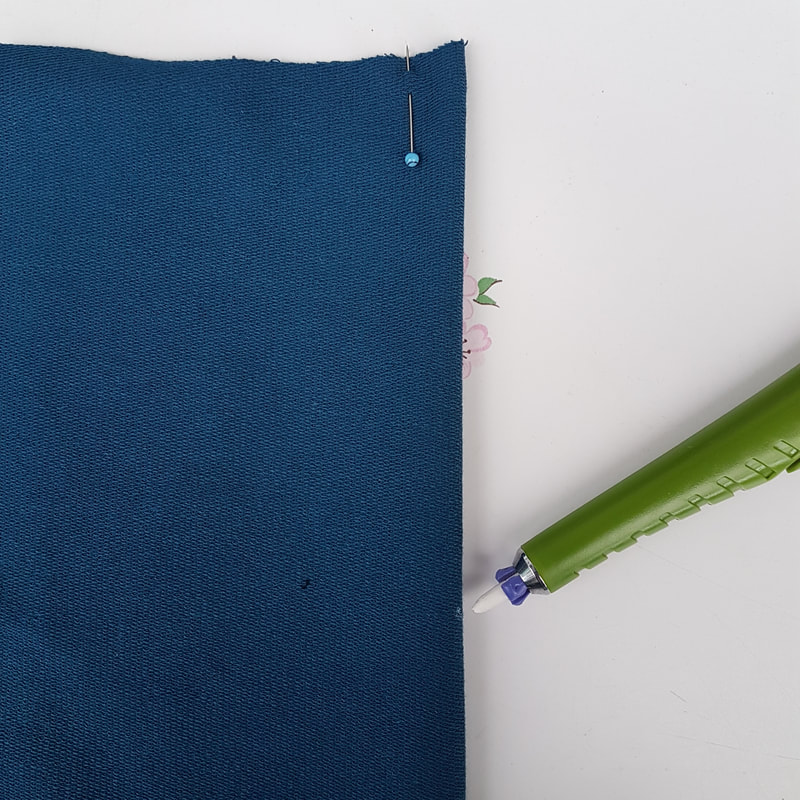
En geef het begin van de coupenaad aan.
And indicate the beginning of the dart.
Picture
3c.
Vouw de coupenaad in vanaf het eindpunt en zet het begin vast met een speld.
Fold in the dart from the tip and secure the beginning with a pin.
Picture
3d.
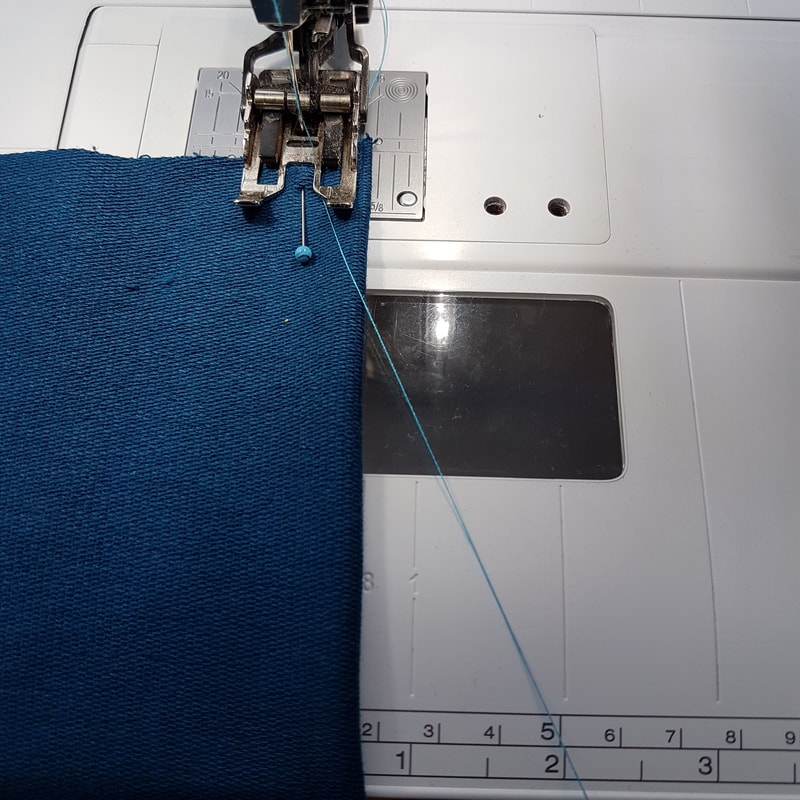
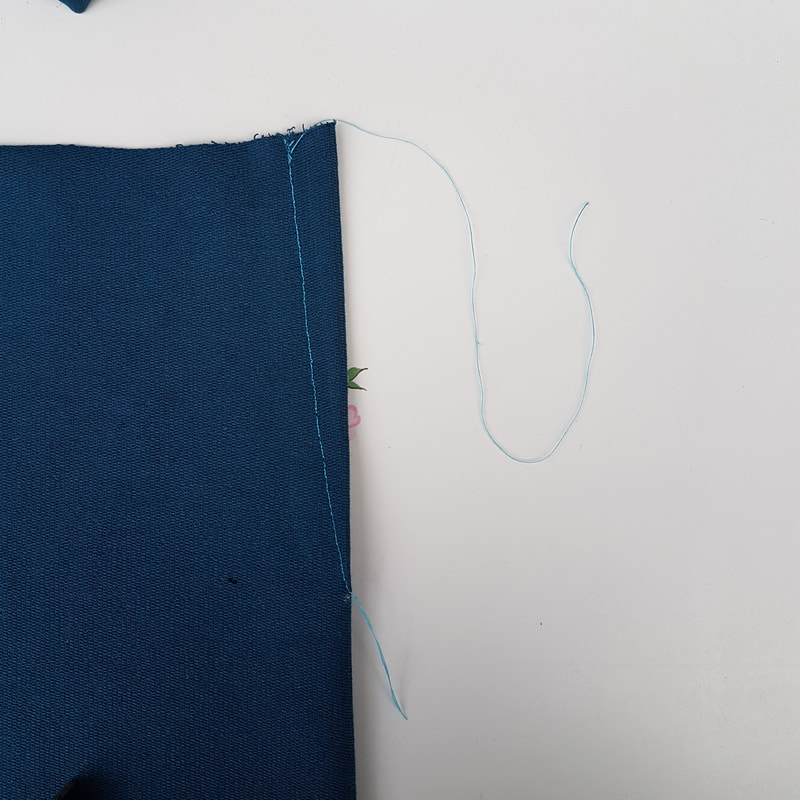
Voor je begint met het naaien van de naad trek je eerst aan de bovendraad tot je een stuk hebt zo lang als de coupenaad.
Before sewing the dart, pull a length of upper thread as long as the dart.
Picture
3e.
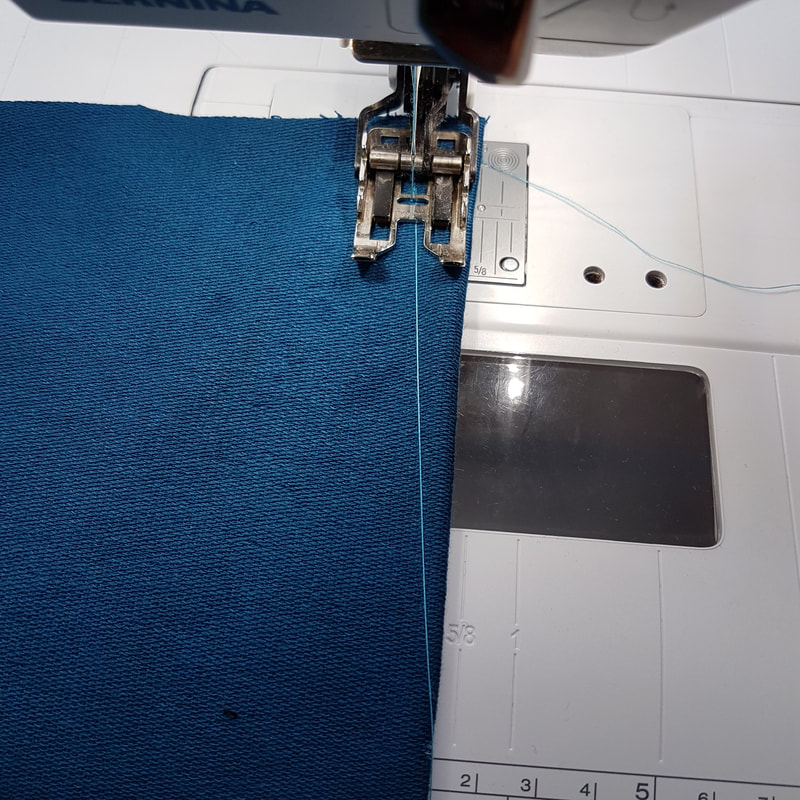
Gebruik dit draadje als een lineaal om langs te stikken richting het eindpunt. Do dit met een stretchsteek
Use this thread as a guide to stitch along in the direction of the tip of the dart. Do this with a stretchstitch.
Picture
3f.
De coupenaad als deze is gestikt. Pers de coupenaden plat richting de zijnaden.
The dart when sewn. Press flat in the direction of the sideseams.
Picture
3g.
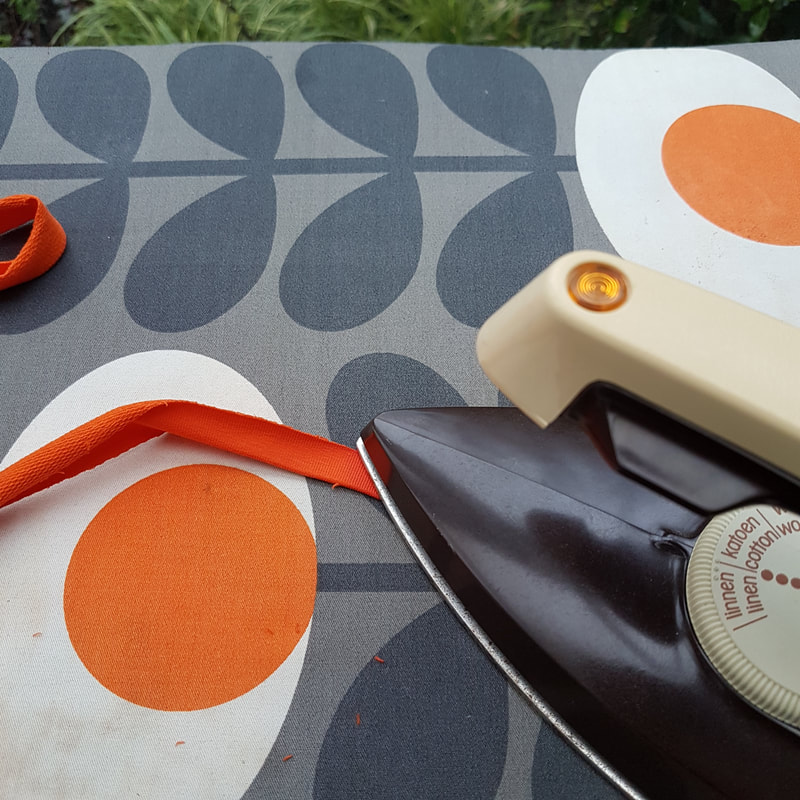
Vouw de strookjes stof die je geknipt hebt voor de piping om en pers plat.
Fold the strips of fabrics you cut for the piping over and press.
Picture
3h.
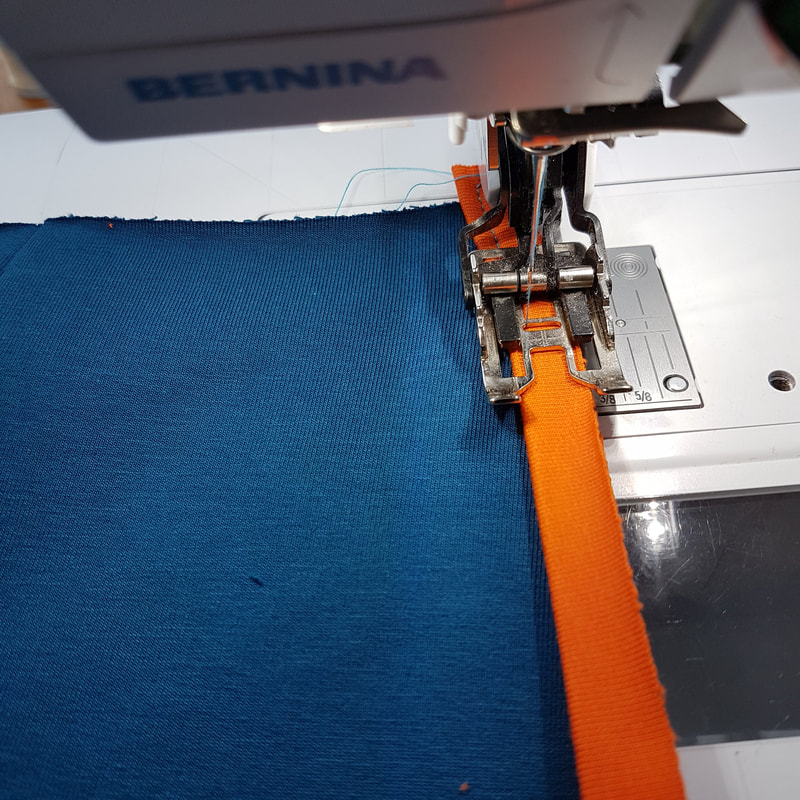
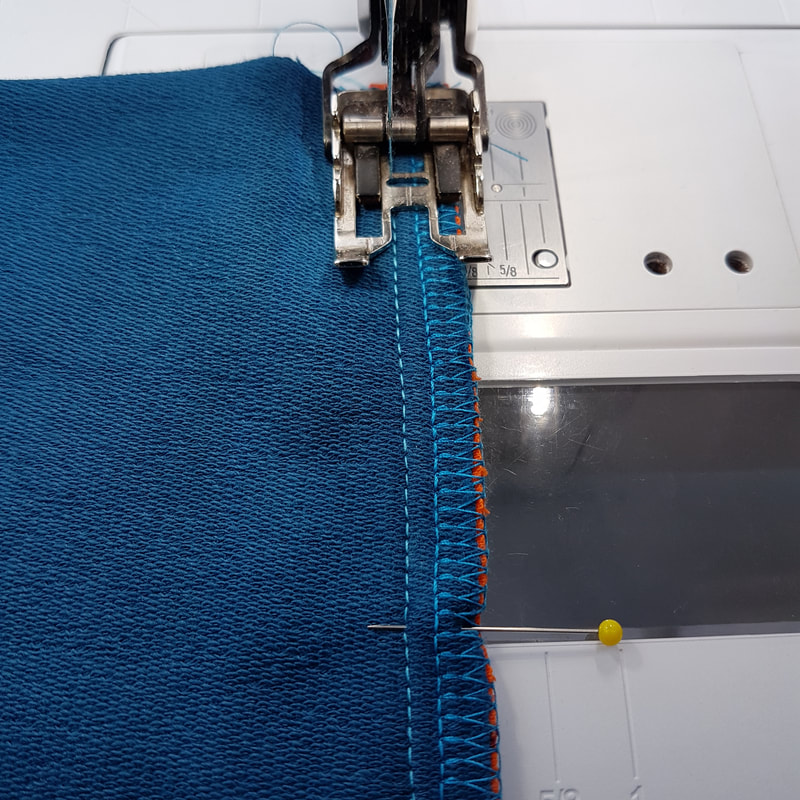
Stik de dubbelgevouwen strook op 1cm van de kant met een normale steek van het voorpasje en achterpand.
Sew the folded strip on 1cm from the edge of the front yoke and backpiece with a regular stitch.
Picture
3i.
Werk de randen met de overlockmachine af van: zijnaden voor (alleen bij de piping versie), zijnaden achter (alleen bij de piping versie), de rand van de belegdelen achterpand.
Finish the edges with the overlockmachine of the: sideseams front (only the piping version), sideseams back (only the piping version), the edge of the facingparts backpiece.

4.
Split
Slit
Picture
4a.
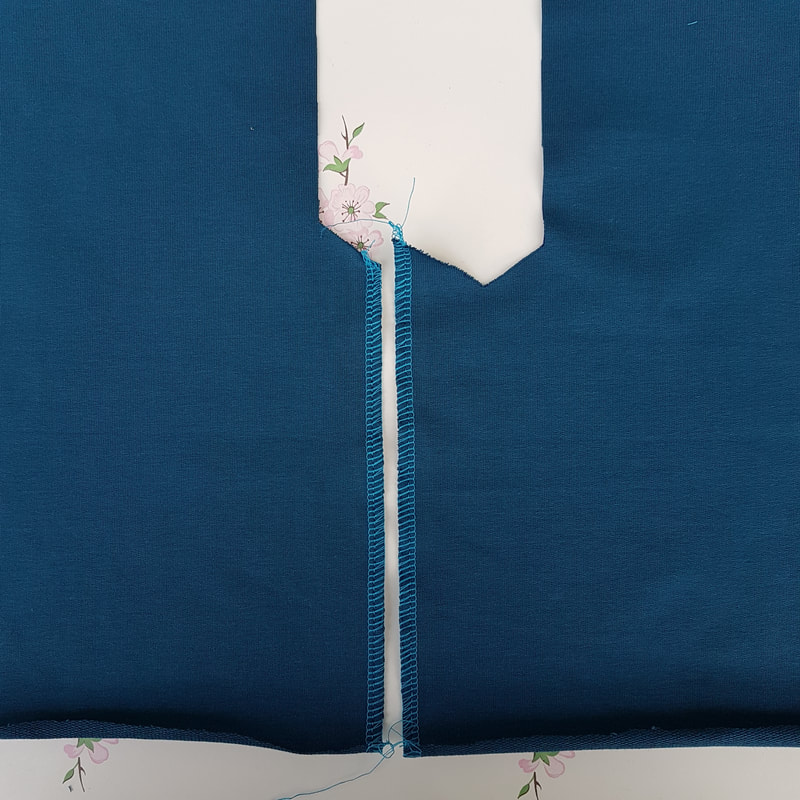
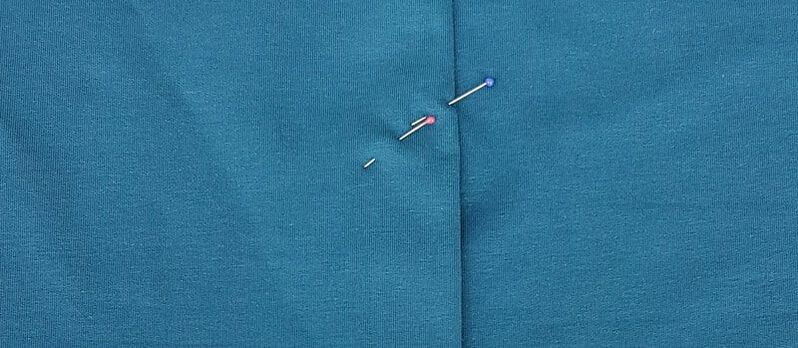
Het achter rokpand bestaat uit twee delen, een linker en rechterpand. Het linkerpand valt straks over het (uitstekende) rechter belegdeel.
The back skirt piece consists of two pieces, a left and a right part. The left part folds over the right (sticking out) facing part.
Picture
4b.
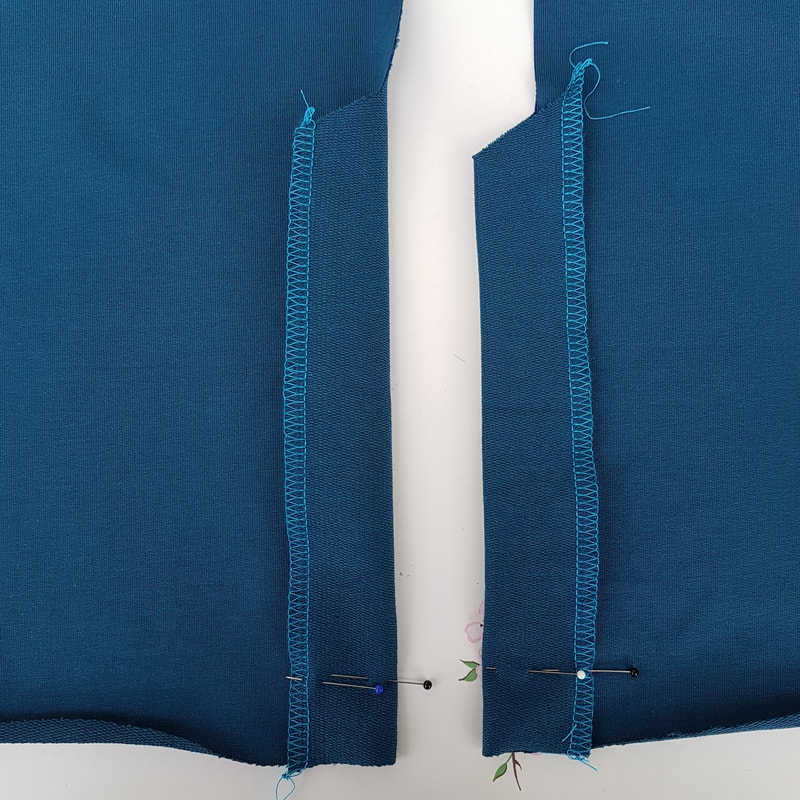
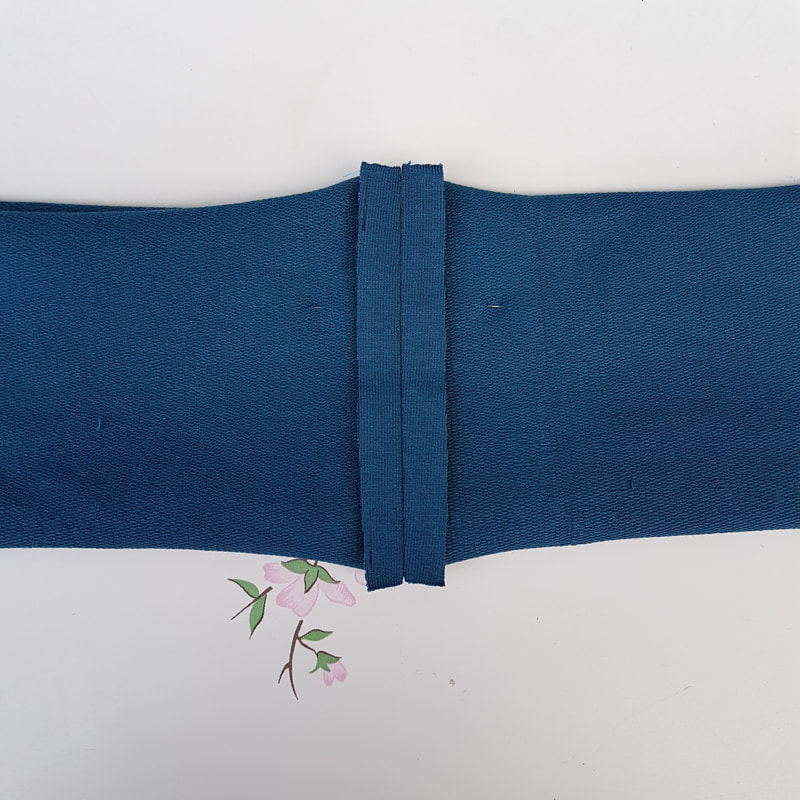
Vouw beide belegdelen naar de voorkant. (op je patroon zie je een vouwlijn). Speld op 2 cm van de onderkant
Fold both facing parts over to the front. (you see a folding line on your paper pattern. Pin on 2cm from the bottom edge.
Picture
4c.
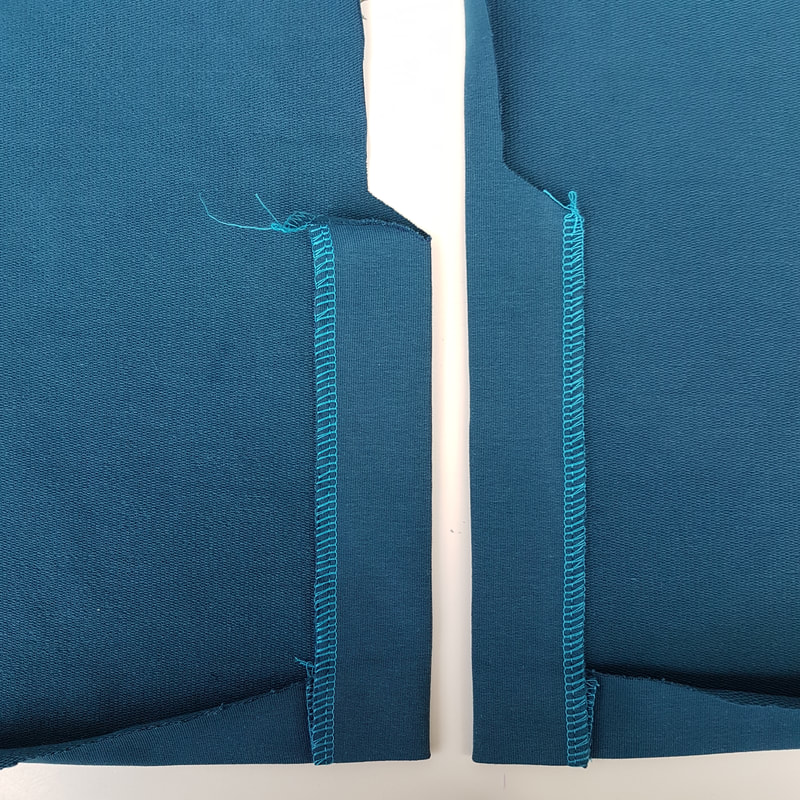
Stik op 2 cm van de onderkant en keer om.
Sew on 2cm from the bottom edge en turn inside out.
Picture
4d.
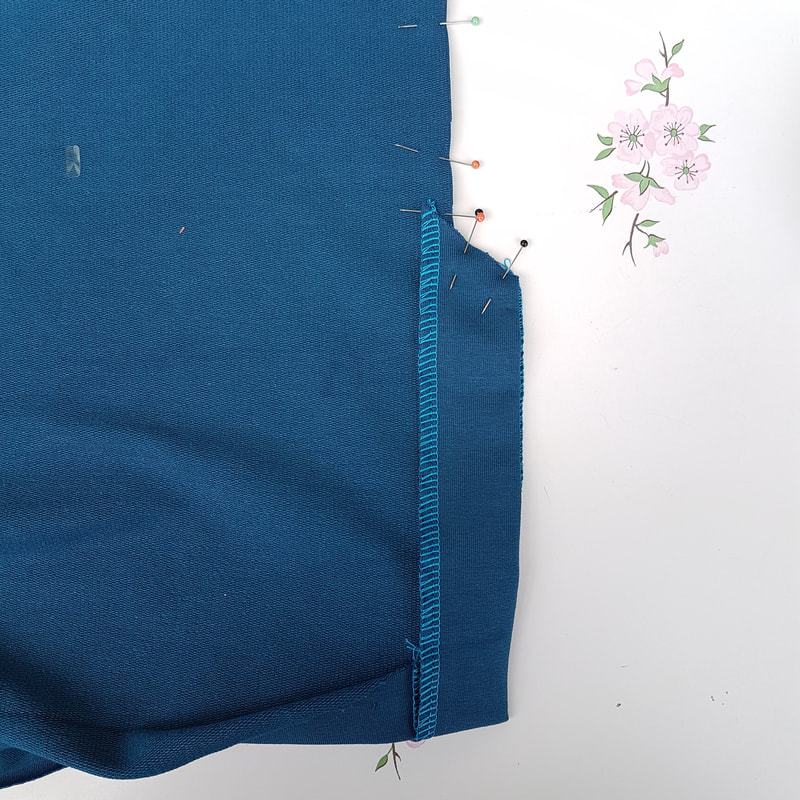
Leg de belegdelen op elkaar en speld de middenachternaad dicht en de bovenkanten van de belegdelen samen.
Place the facingparts on top of each other and pin the midbackseam and the top of the facingparts together.
Picture
4e.
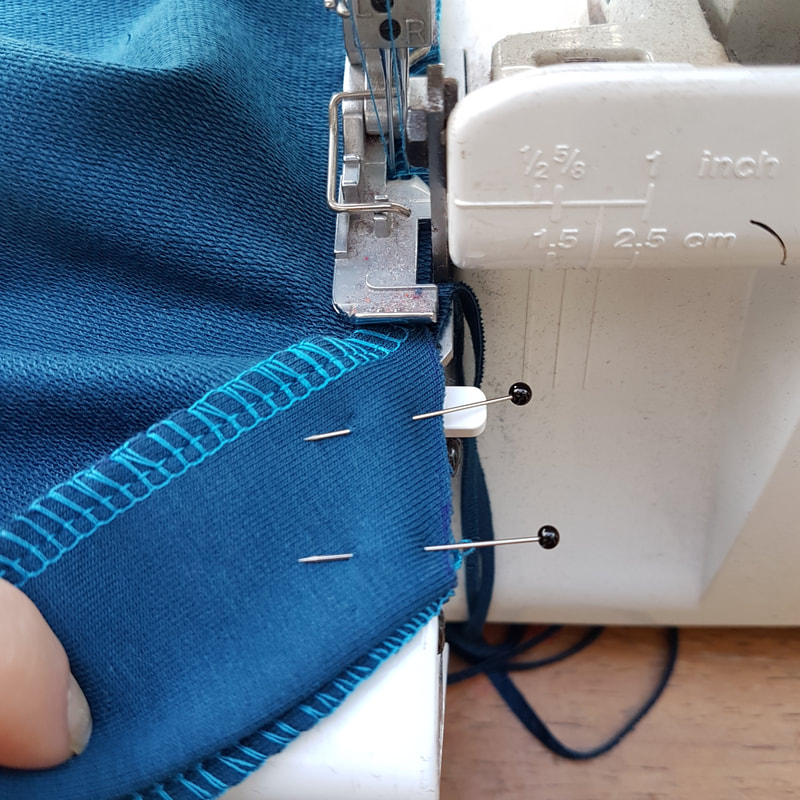
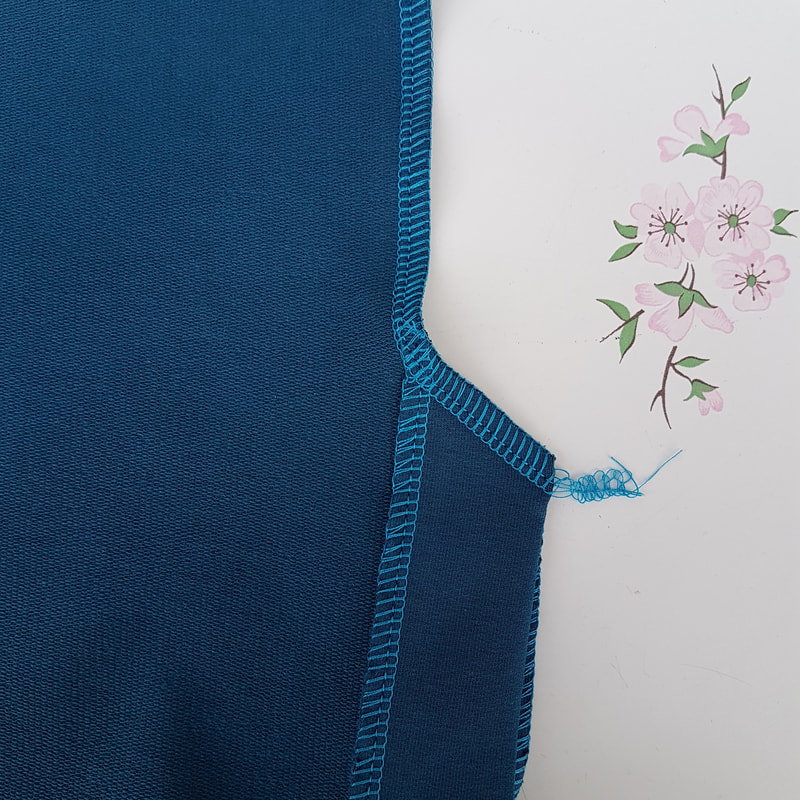
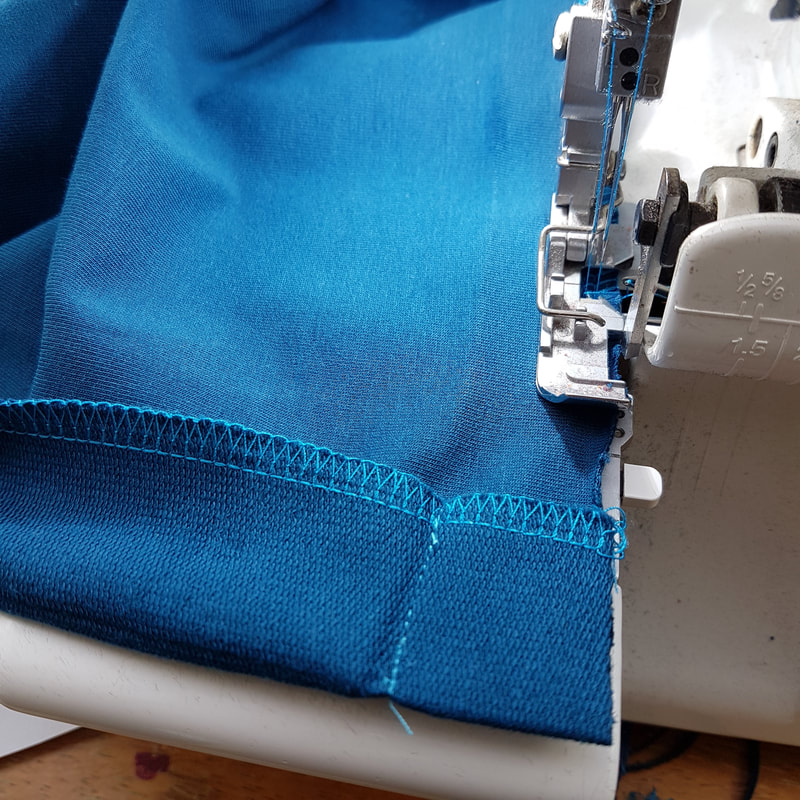
Overlock in een keer de middenachternaad en belegdelen samen.
Overlock the midbackseam and facingparts together.
Picture
4f.
Vouw het beleg naar rechts.
Fold the facing to the right.
Picture
4g.
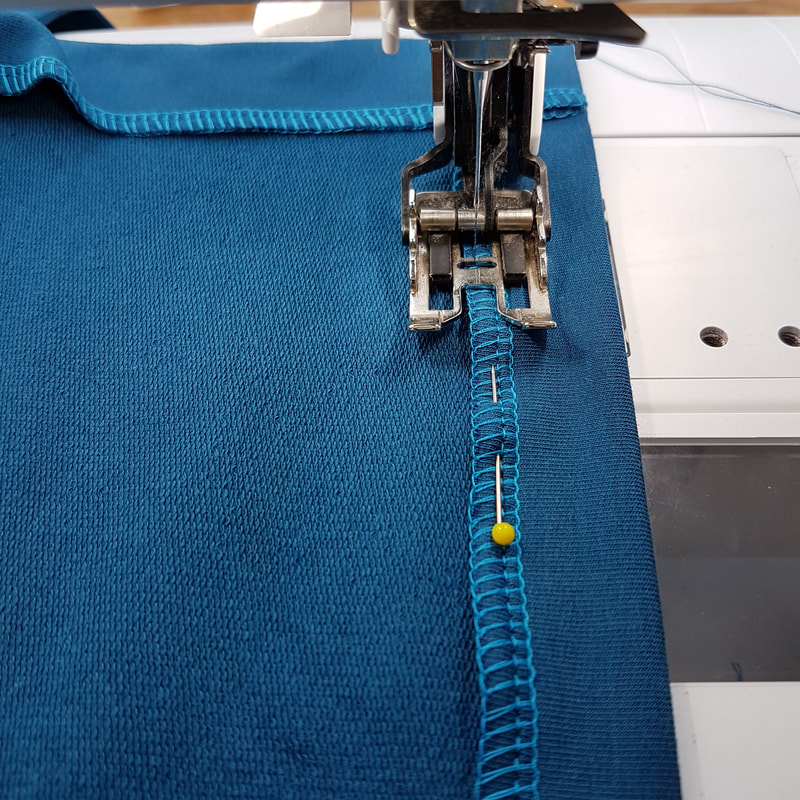
Stik de bovenrand van het beleg door.
Topstitch the top edge of the facing.

5.
Tailleband
Waistband

Er zijn twee tailleband opties, de sportieve en de tailleband met lusjes en riem
There are two waistband options: The sporty waistband and the waistband with loops and belt


Sportieve tailleband/Sporty waistband
Picture
5a.
Vouw de band in de breedte doormidden en stik op 1cm vanaf de rand met een stretchsteek. Dit is je midden achternaad.
Fold the waistband in half and sew on 1cm from the edge with a stretch stitch. This is now your back seam.
Picture
5b.
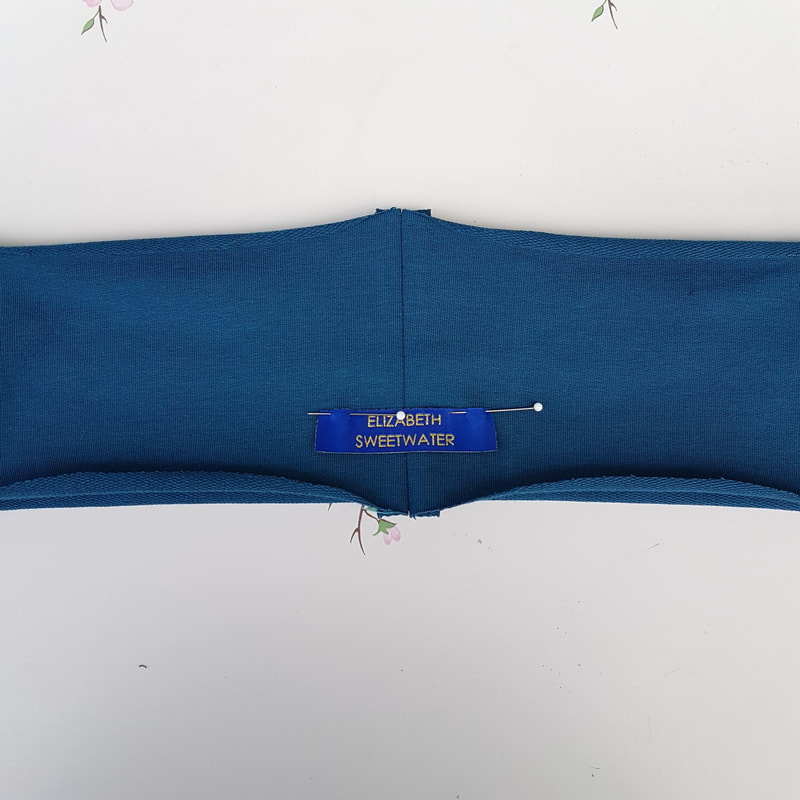
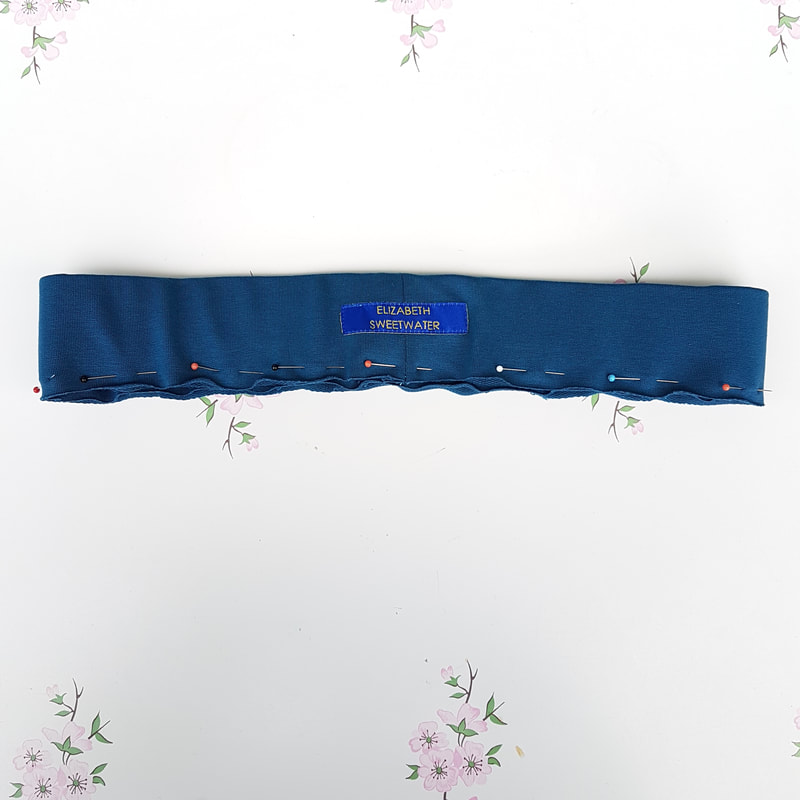
Stik eventueel een label aan de binnenkant.
Sew a label on the inside (optional).
Picture
5c.
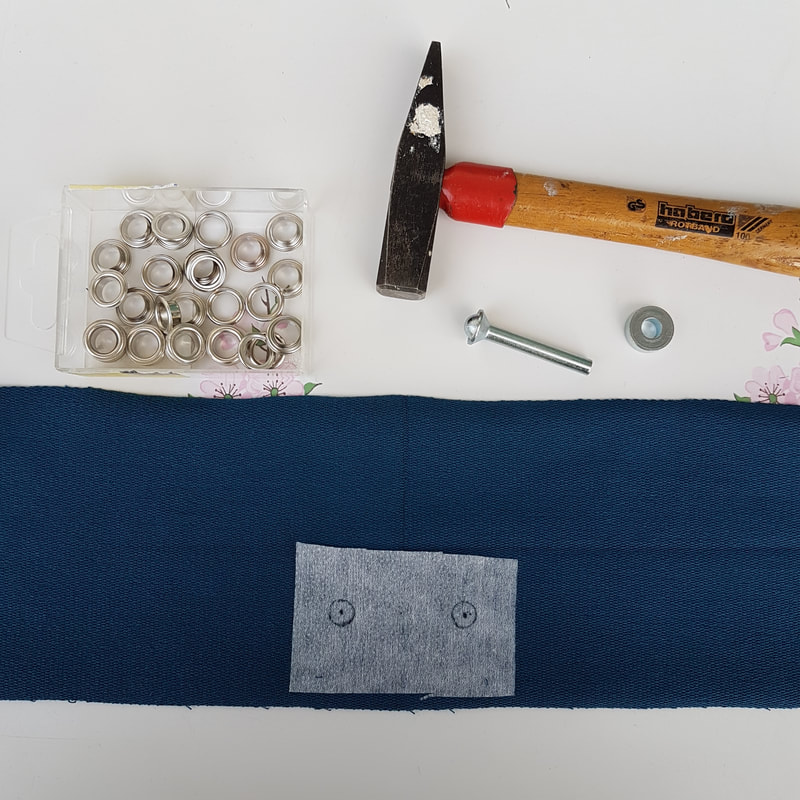
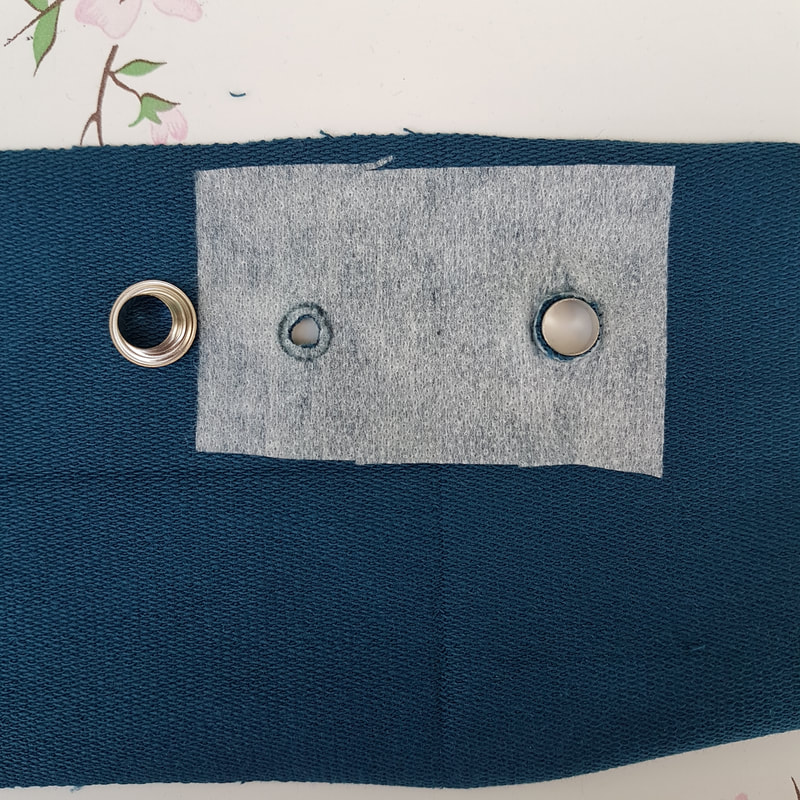
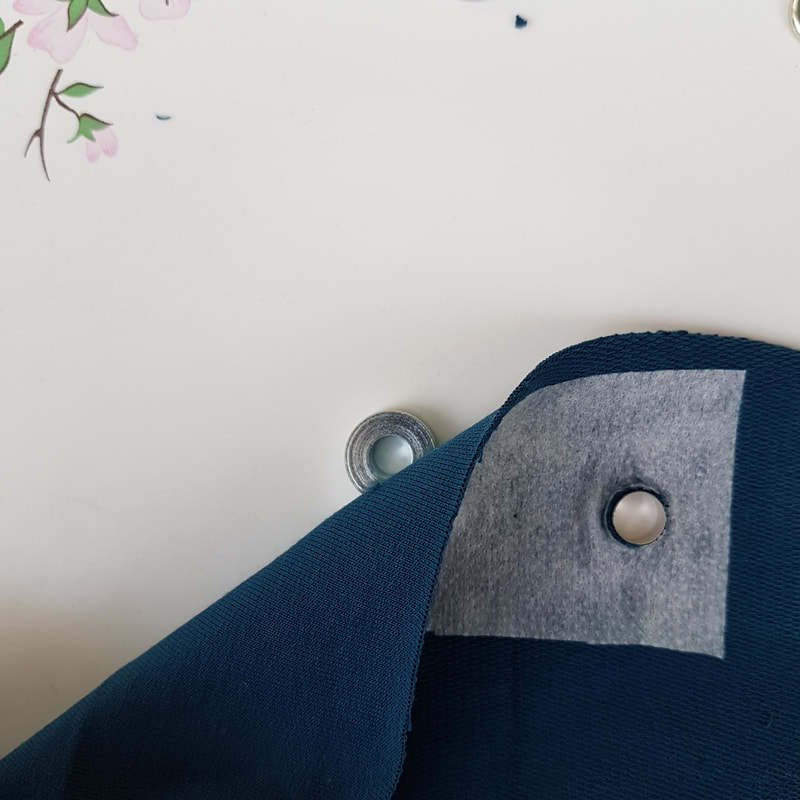
Verstevig de achterkant van de stof met vlieseline daar waar de nestel komt. Geef aan waar de nestel moet komen en knip een kleine opening. Je hebt een setje nestels nodig van 8mm met bijbehorend gereedschap. Je kunt de nestels zowel met een tang als met een hamer in de stof knijpen/slaan.
Reinforce the back of the fabric with fusible non stretch interlining  where the eyelet will be. Indicate where the eyelet should be and cut a little opening.
You need a set of 8mm eyelets with the tools. You can press / hammer the eyelets with pliers or with a hammer.

Picture
5d.
Steek het ringetje met het opstaande randje door het gaatje.
Insert the ring with the raised edge through the hole.
Picture
5e.
Plaats het metalen schijfje onder het ringetje.
Place the metal disc under the ring.
Picture
5f.
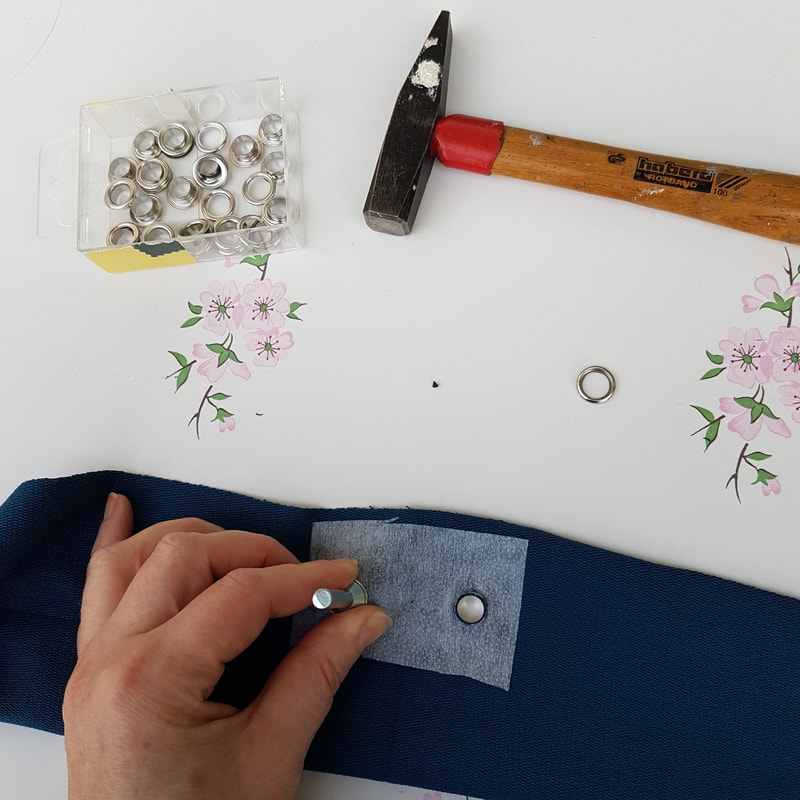
Plaats het platte ringetje op het ringetje met het opstaande randje. Plaats het staafvormige gereedschapje in het ringetje en sla met de hamer de twee ringetjes vast.
Place the flat ring onto the ring with the raised edge. Place the rod-shaped tool in the ring and hit the two rings with the hammer until fused together.
Picture
5g.
Leg de uiteinden van het elastiek op elkaar en stik stevig vast.
Place both ends of the elastic on top of each other an topstitch.
Picture
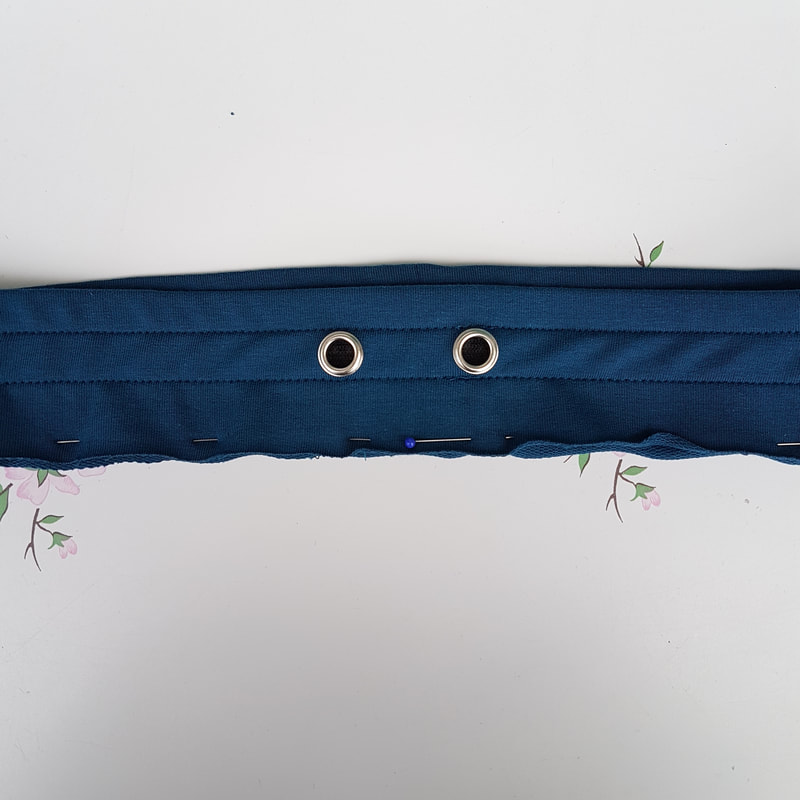
5h.
Vouw de band om het elastiek heen en zet de onderrand vast met spelden.
Fold the waistband around the elastic and secure with pins.
Picture
5i.
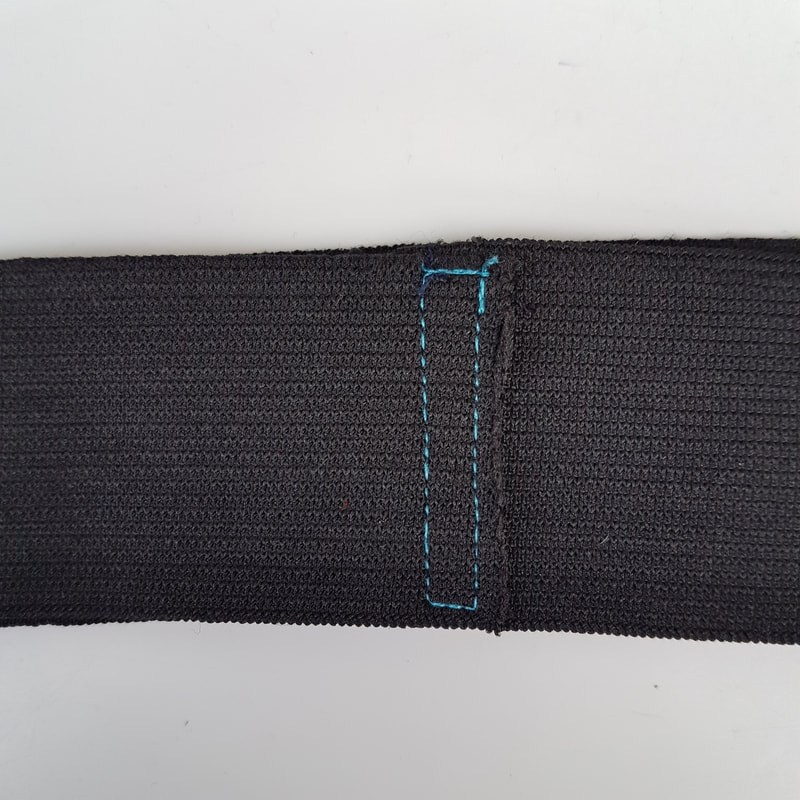
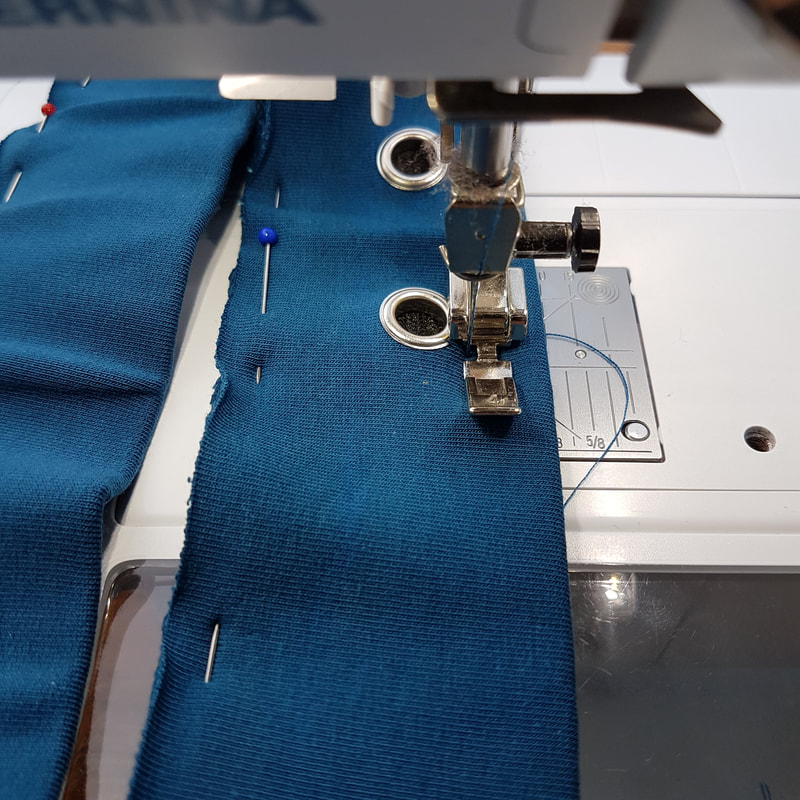
Stik een tunneltje van ong.1cm breed in de band waar straks een koordje doorheen kan.
Gebruik hiervoor een ritsvoet zodat je langs de nestels kan. Gebruik wel een stretchsteek, met aan-en uittrekken heb je veel rek nodig.
Sew a tunnel of approx. 1cm in the band for the drawstring later. Use a zipper foot for this so that you can pass the eyelet. Use a stretchstitch, with taking the skirt on and off you need  quite a bit of stretch.
Picture
5j.
De sportieve tailleband is klaar.
The sporty band is finished.


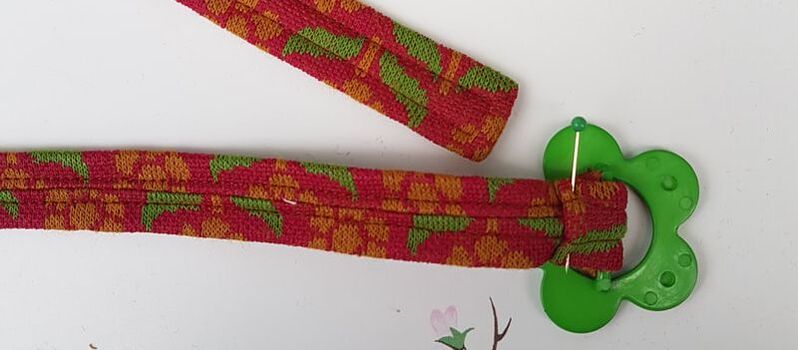
Tailleband met lusjes en riem
Waistband with loops and belt
Picture
5k.
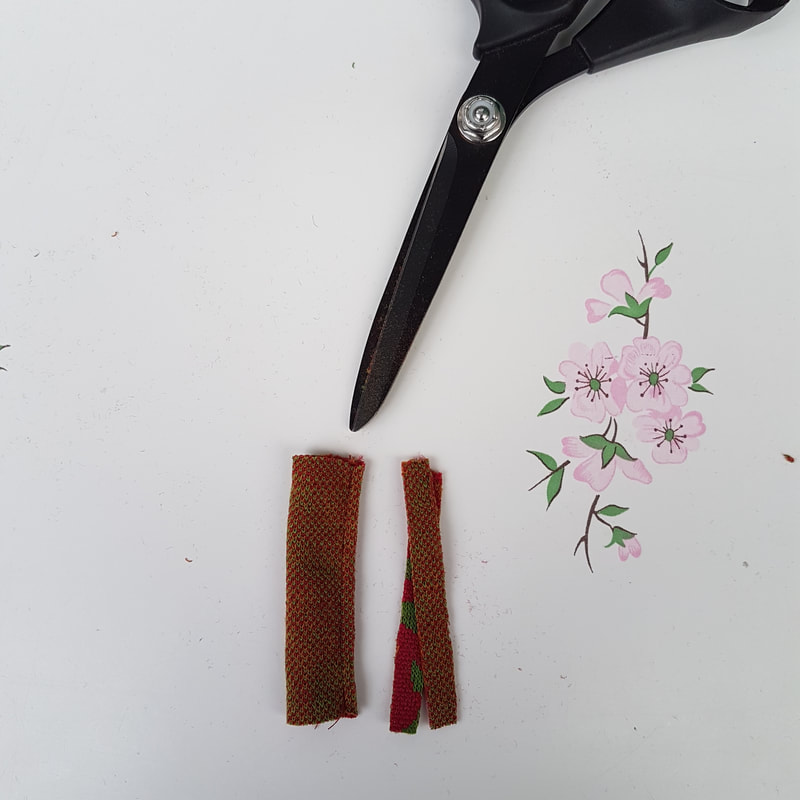
Maak eerst de lusjes. Vouw het lusje in de breedte dubbel en stik op 1cm van de rand.
First the loops. Fold the loop in half widthwise and sew on 1cm from the edge.
Picture
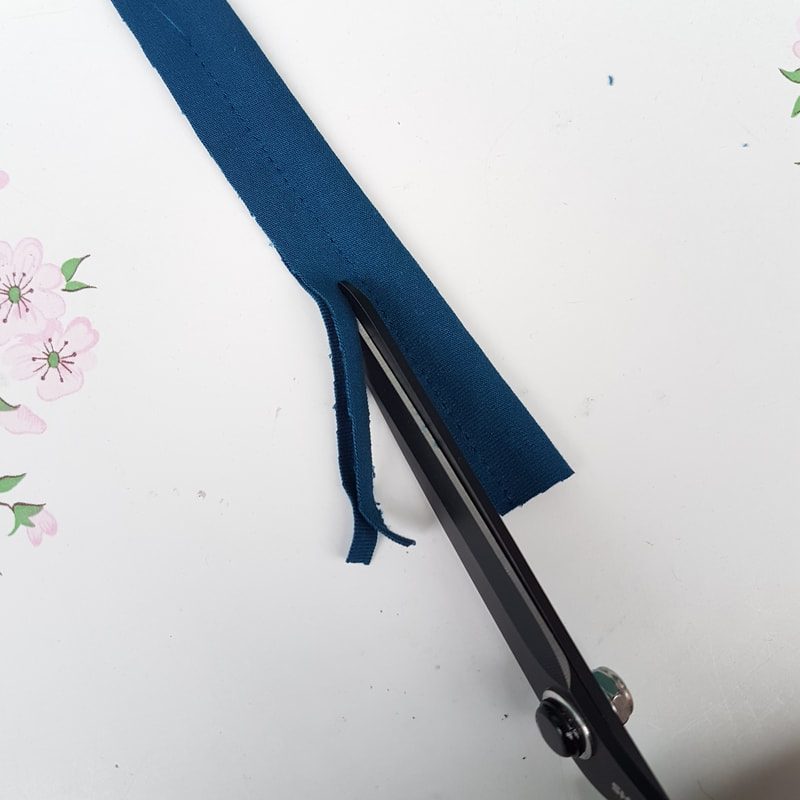
5l.
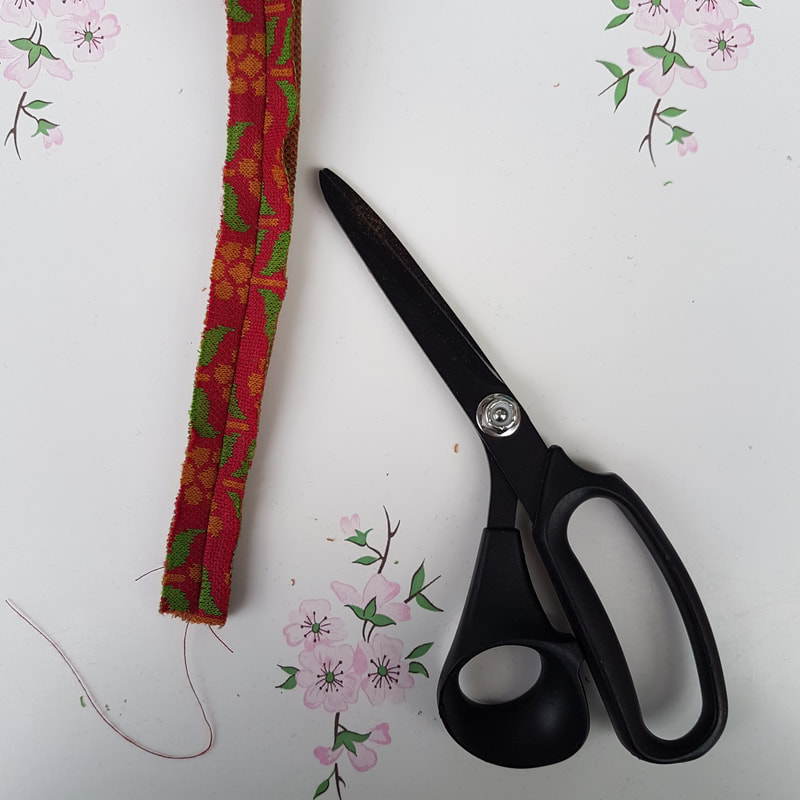
Knip de naad kort af tot er een paar mm over is.
Cut the seam short untill there is a few mm left.
Picture
5m.
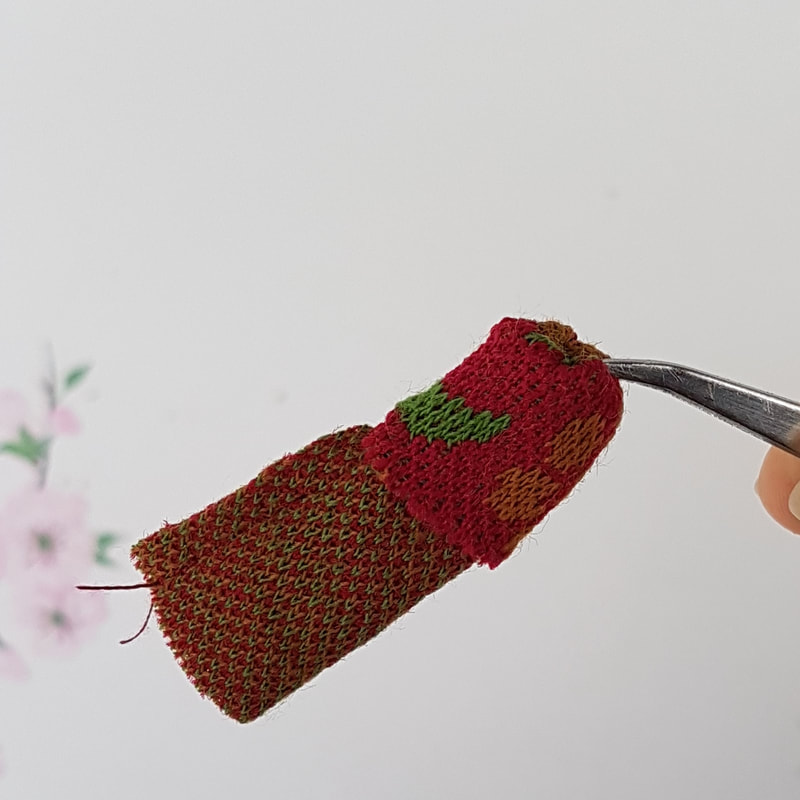
Keer het lusje om. Een handig hulpje hierbij is de kromme pincet waar je ook garen in de naalden van je lockmachine rijgt.
Reverse the loop. A handy aid here is the curved tweezers, you use to thread yarn into the needles of your overlock machine.
Picture
5n.
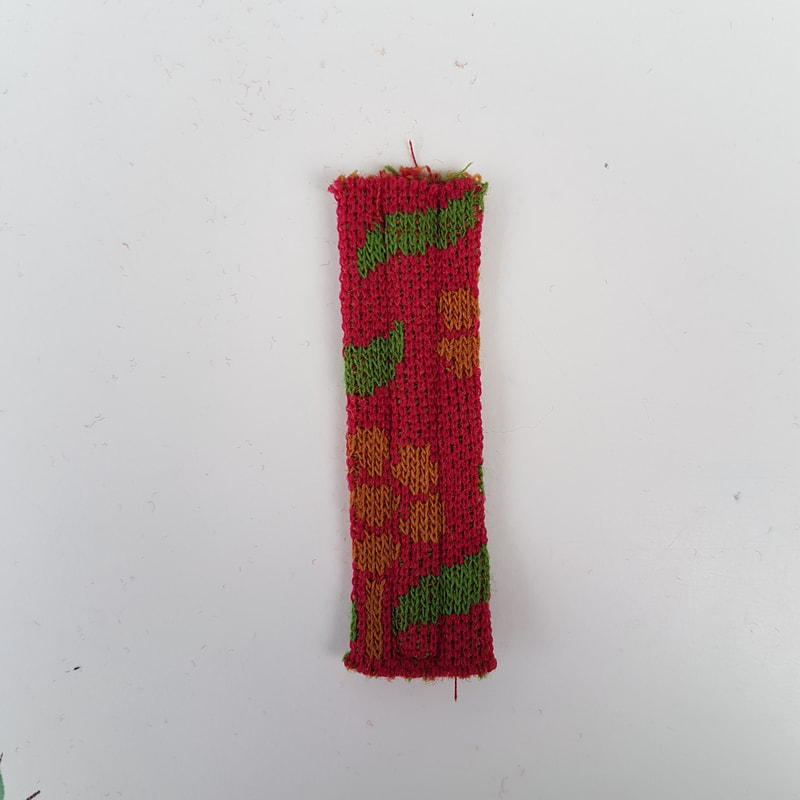
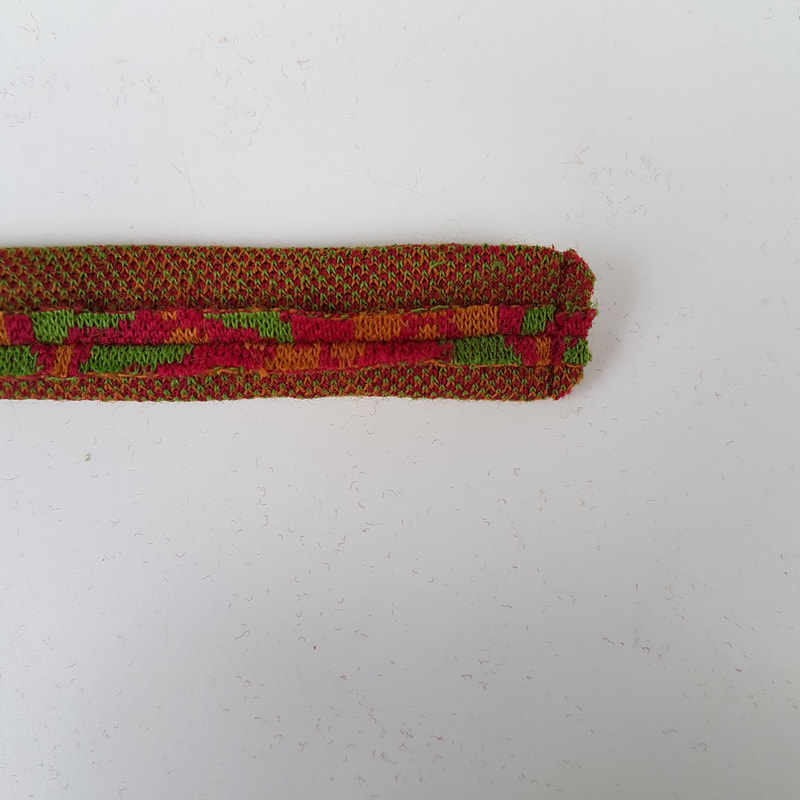
Pers plat en stik door op ong. 0.5cm van de randen.
Press flat and topstitch on appr. 0.5cm from the edges.
Picture
5o.
Leg de lusjes met de goede kant op de tailleband zoals aangegeven op het patroon.
Place the loops right side on the waistband as indicate on the pattern.
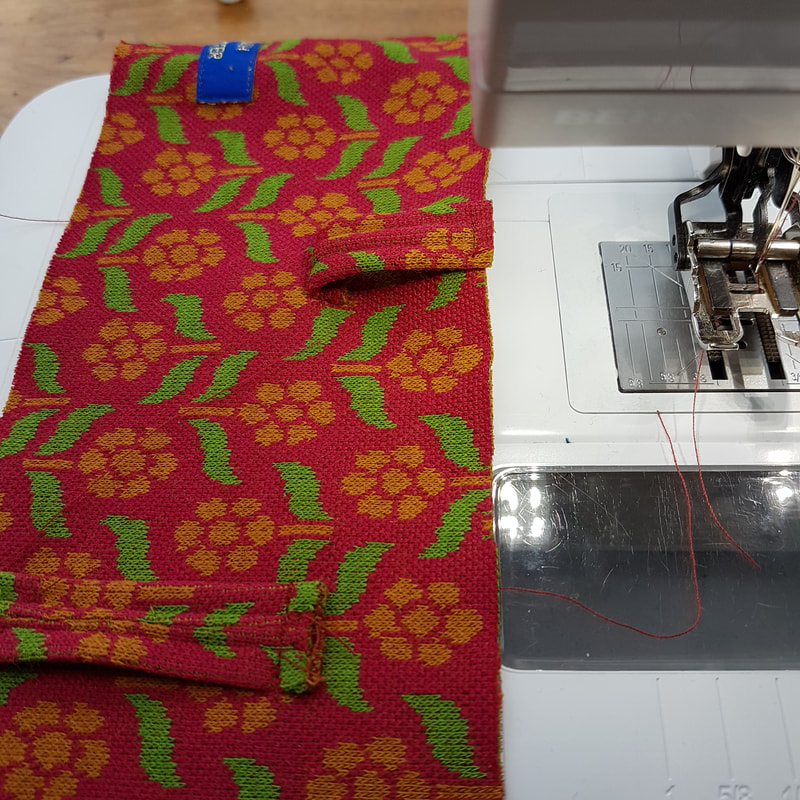
Picture
5p.
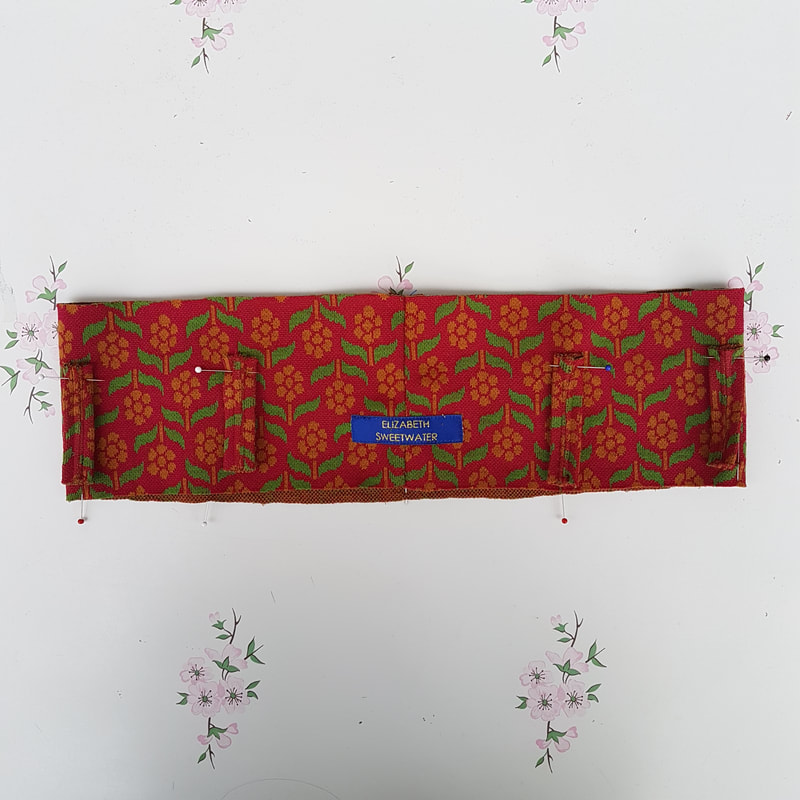
Stik het lusjes op de tailleband (op foto het lusje vooraan) vouw om en zet vast aan de onderkant van de tailleband (op foto lusje achteraan).
Verwerk nu het elastiek in de tailleband, volgens stap 5g en 5h.
Stitch the loops on the waistband (in photo the loop in the front), fold over and fasten at the bottom of the waistband (on photo loop at the back).
It is also advisable to add elastic inside the waistband. To do this see steps 5g and 5h.
Picture
5q.
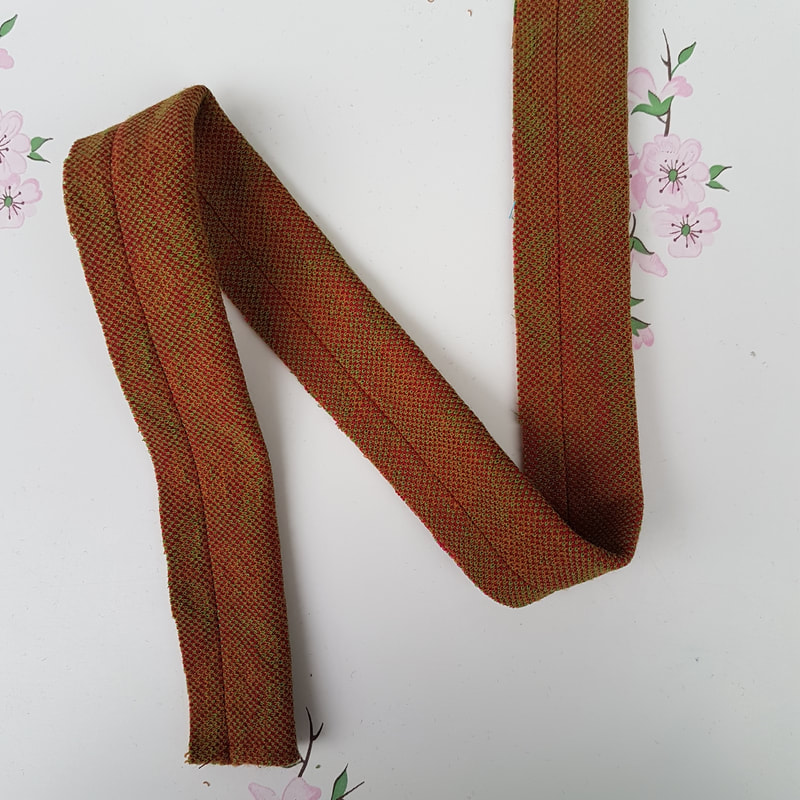
Vouw strook voor de ceintuur in de breedte dubbel en stik op 1 cm van de rand.
Fold the strip of fabric for the belt in half widthwise and sew on 1cm from the edge.
Picture
5r.
Pers de naad open. De naad komt straks aan de achterkant van de ceintuur.
Press open the seam. The seam will be at the back of the belt.
Picture
5s.
Knip de naad kort af en stik de korte kant af. Knip ook deze naad kort af en knip de hoekjes schuin af.
Cut the seam short and sew the short side. Cut this seam short as well and cut the corners diagonally.
Picture
5t.
Keer de ceintuur binnenstebuiten en pers plat. Naad aan de binnenkant.
Turn the belt inside out and press. Seam is on the inside.
Picture
5u.
Stik de ceintuur door op 0.5 cm van de kant. Vouw het open uiteinde om het staafje van de gesp en zet vast met de hand.
Topstitch the belt on 0.5cm from the edge. Fold the open end around the bar of the buckle and fasten by hand.

6.
Zijnaden, tailleband aanzetten en zoom
Sideseams, attach waistband and hem

Picture
6a.
Als je de rok maakt met pipingbiezen in de zijnaden dan speld je de zijnaden tegen elkaar en stik je over de zichtbare stiksels aan de kant van de piping met een stretchsteek.
Maak je de rok zonder biezen dan speld je de zijnaden tegen elkaar en lock je de naad in een keer. Pers de zijnaden open.
If you make the skirt with piping in the side seams, pin the side seams together and stitch over the visible stitching on the side of the piping with a stretch stitch.
If you make the skirt without piping, pin the side seams together and sew the seam in one go with the overlocker. Press the side seams open.

Picture
6b.
Overlock de onderrand van de rok. Je moet hiervoor even het split beleg weer terug binnestebuiten keren.
Overlock the edge of the skirt. For this you might have to turn the slit facing inside out again.
Picture
6c.
Speld en strijk de zoom, en stik deze met een gewone steek op je naaimachine vast.
Press and pin the hem and use a regular sewing machine to stitch.
Picture
6d.
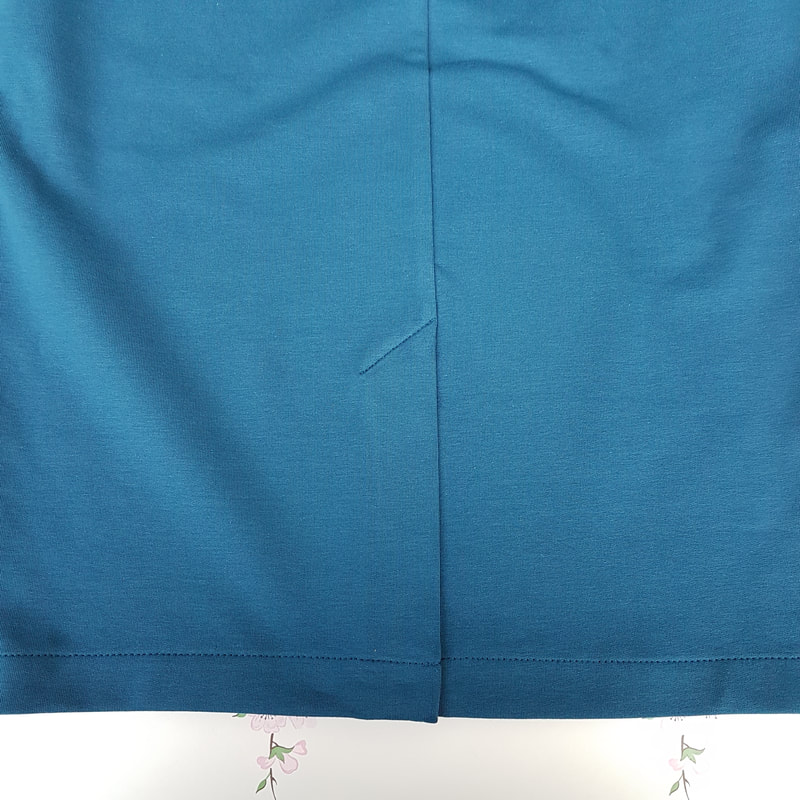
De zoom en split.
The hem and slit.
Picture
6e.
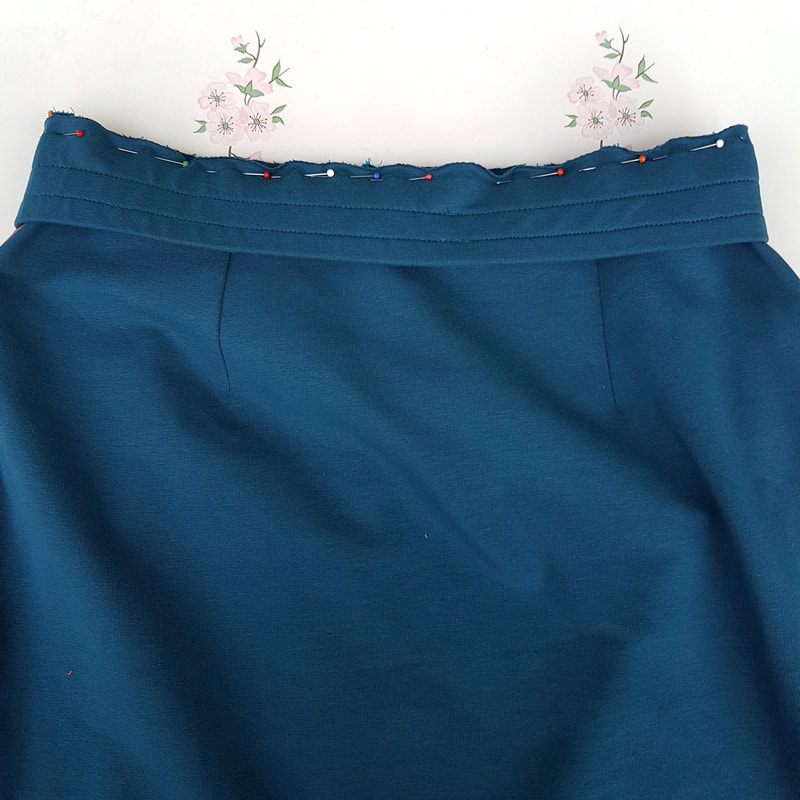
Speld nu de tailleband tegen de rok, goede kanten op elkaar.
Pin the waistband to the skirt, right sides together.
Picture
6f.
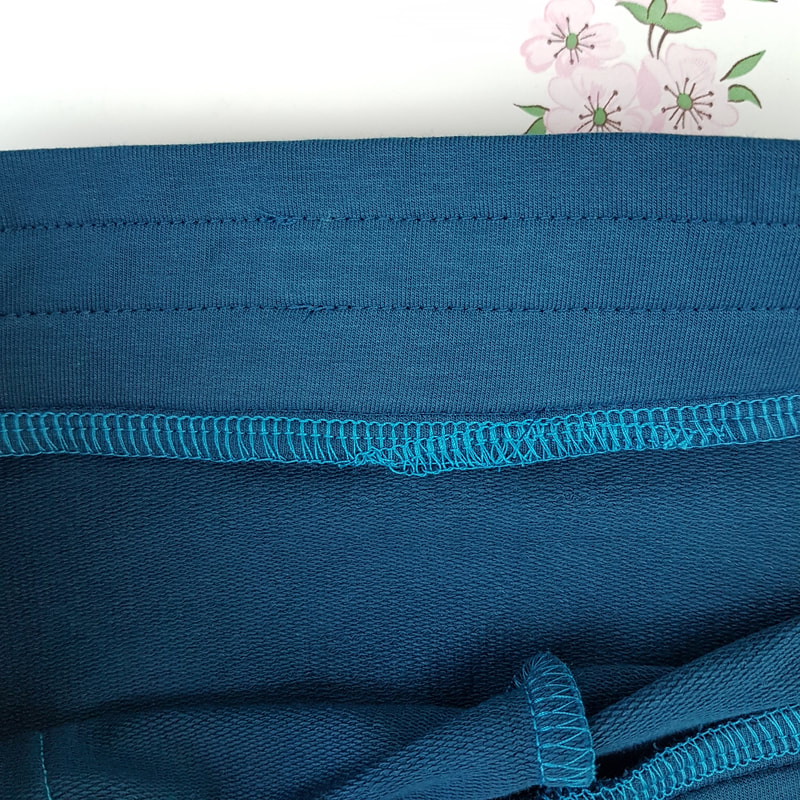
Naai de band vast aan de rok met de overlockmachine. De band met de lusjes : de onderkant van de lusjes worden vastgezet in de naad.
Sew the band to the skirt with the overlock machine. The band with the loops: the bottom of the loops are fastened in the seam.
Picture
6g.
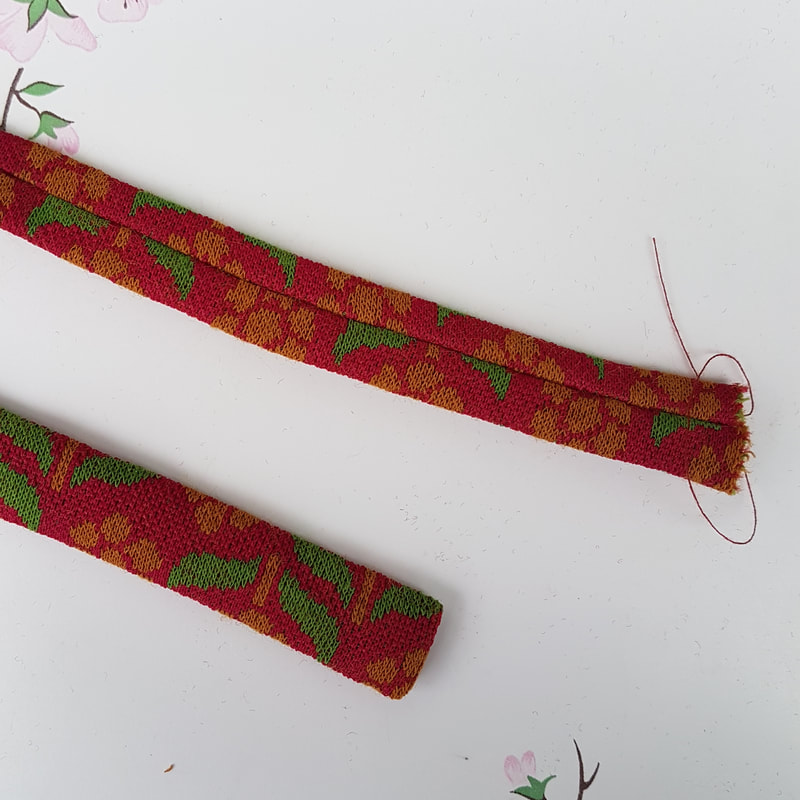
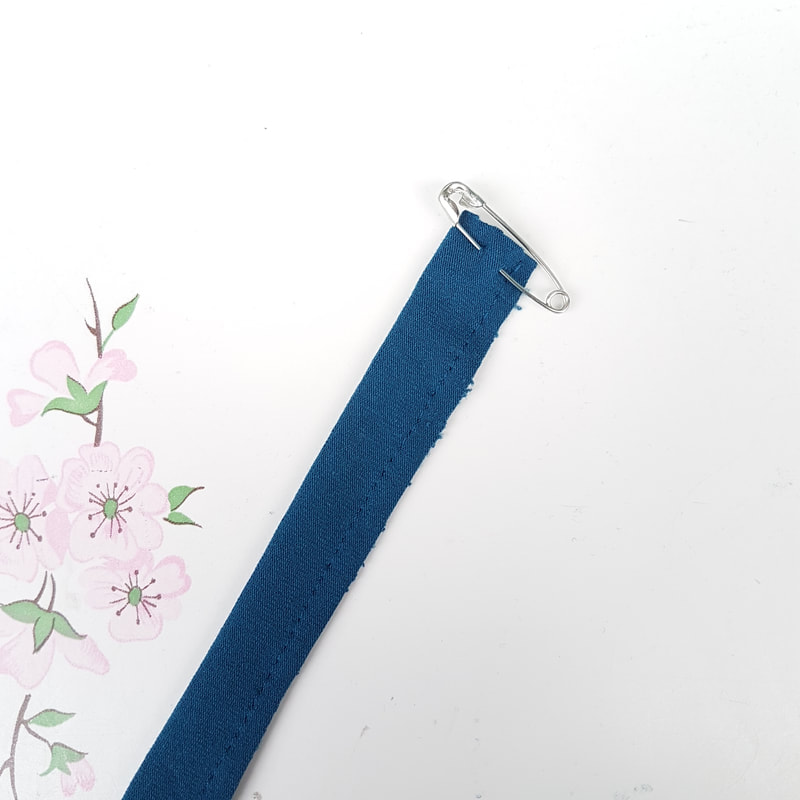
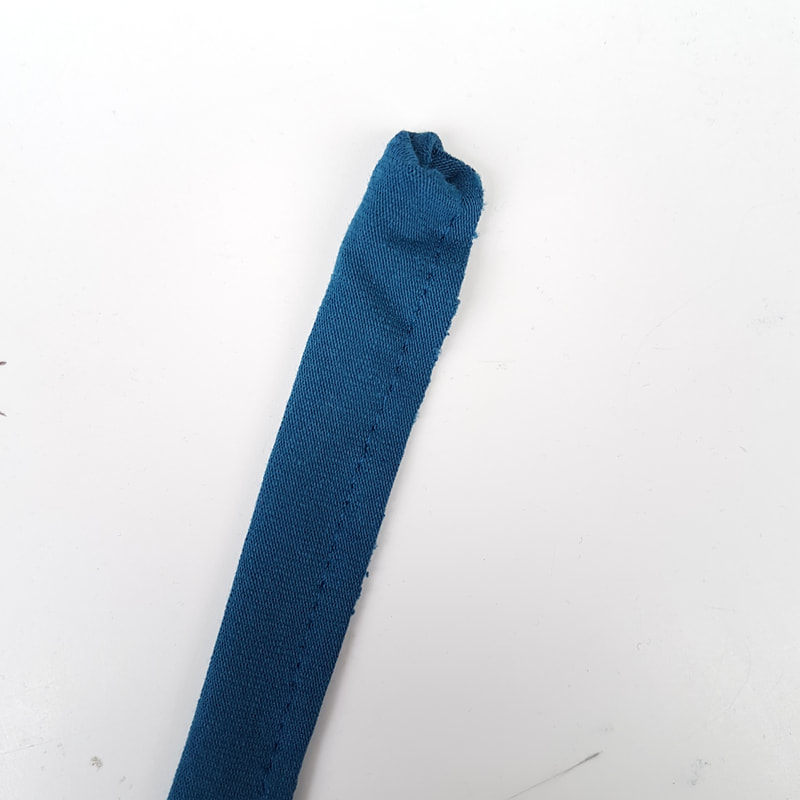
Vouw de strook stof voor het koord dubbel en stik op 5 cm van de rand. Knip de kort af tot je een paar mm naad overhoudt.
Fold the strip of fabric for the draw string over right sides together and sew on 0,5 cm from the edge. Cut the seam away until you are left with a few mm seam.
Picture
6h.
Bevestig een veiligheidsspeldje aan het uiteinde.
Attach a safetypin at the end.
Picture
6i.
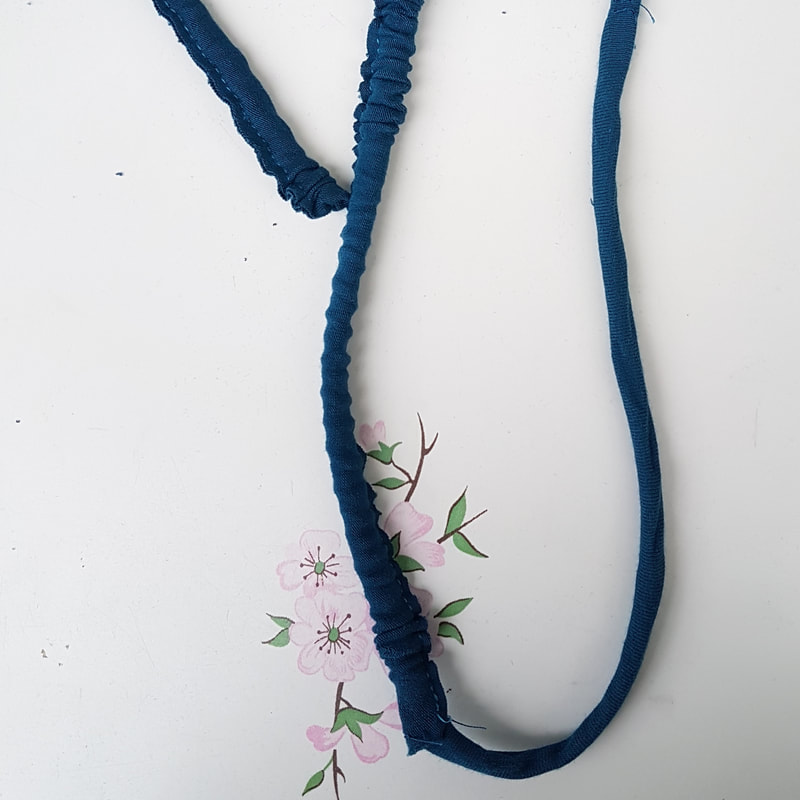
Stop het speldje in de tunnel en rijg het er doorheen tot je bij de andere opening uitkomt.
Tuck the safetypin inside the tube and feed it through to the other opening.
Picture
6j.
Trek het uiteinde door de tunnel.
Pull the end through the tunnel.
Picture
6k.
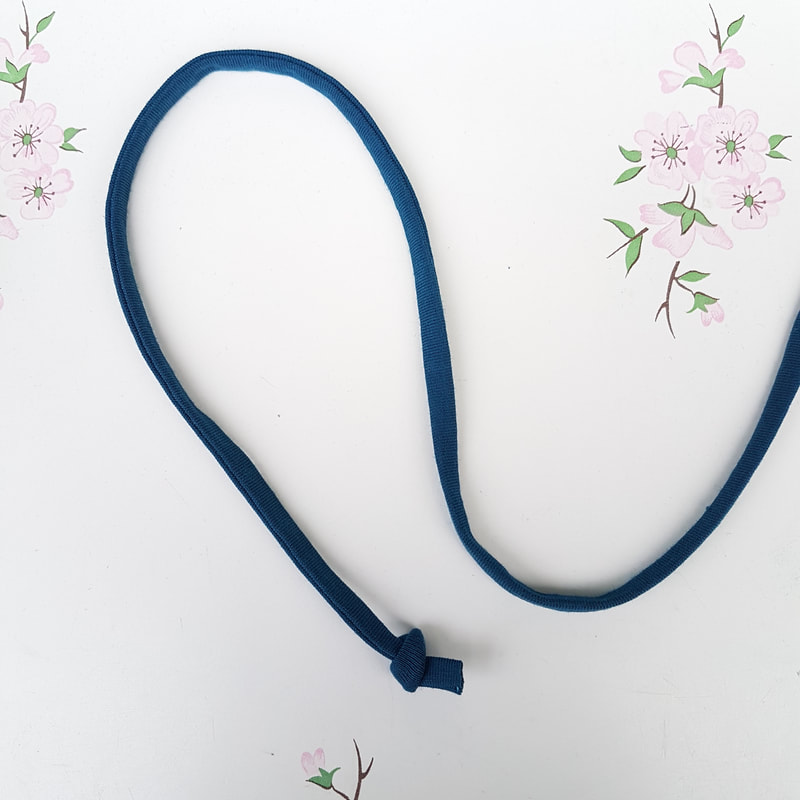
Pers het koordje plat en maak een knoopje aan één uiteinde of bevestig er een koordstopper aan.
Press the drawstring flat and tie a knot in one end or attach the cordstopper.
Picture
6l.
Rijg met behulp van het veigheidspeldje het koord door de tunnel van de tailleband en maak een knoopje/bevestig koordstopper aan het andere uiteinde. Rijg voor het model met de lusjes de ceintuur door de lusjes.
Feed by using the safetypin at the end if the drawstring the drawstring through the tunnel of the waistband. Tie a knot/attach cordstopper at the other end of the drawstring. Feed for the skirt with the loops the belt through the loops.

Nog een laatste keer strijken en je rokje is klaar!
A final ironing and your skirt is finished!

Picture
Picture

Comments are closed.
    Picture

    For all the latest patterns to buy visit my Etsy shop today.

Powered by Create your own unique website with customizable templates.
  • Tutorials
  • Movies
  • Happy Sewers
  • About